Build An In-House Team Or Partner With A Pay-Per-Performance Marketing Agency

For most SME founders, the real challenge usually comes down to two limited resources: money and time.
How do you invest the least, get the biggest return, and avoid burning yourself out along the way?
That question quietly sits behind almost every major decision inside a company.
And it often comes up when founders have to make a big decision.
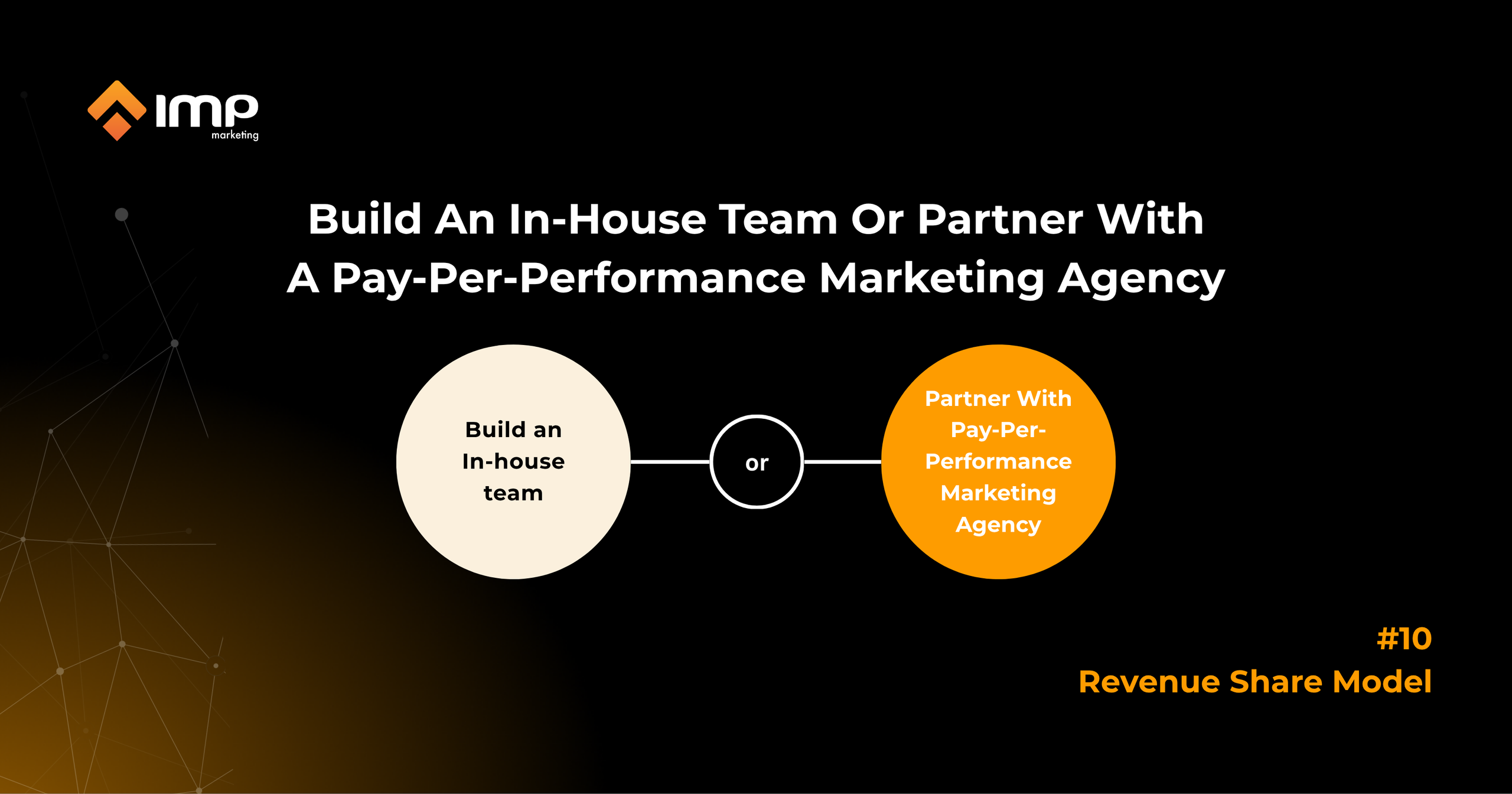
Should you build an in-house marketing team, or partner with a pay-per-performance marketing agency?
The truth is, there is no universal answer.
Every business has different internal capabilities, different goals, and different resources. What works for one company may not work for another.
But before making that decision, there are three key factors worth considering.
1. Your ability to lead and run marketing internally
If you do not have the expertise, experience, or simply the time to properly lead a marketing team, the simplest advice is to outsource it.
Trying to figure it out yourself often leads to more wasted money, more time lost, and most importantly, missed growth opportunities.
Even if you are good at marketing, the real question is not just:
“Can I do this myself?”
It is also:
“Is this the best place for me to invest my time and energy?”
Growing a business means constantly solving problems across product, logistics, customer service, hiring, and operations. As a founder, you have to focus your energy on the areas that create the biggest leverage at each stage of the company.
That is why many founders choose to stay focused on strategy and direction, while letting specialized partners handle the execution. This approach saves time and often improves efficiency.
2. Your ability to carry the full cost of an internal team
Building an in-house team is not just about paying salaries.
You are also taking on the hidden costs, including recruiting, training, benefits, office expenses, team management, and the constant risk of employee turnover.
On average, the true cost of an employee is often 2.5 to 3 times their salary.
With a pay-per-performance marketing agency, on the other hand, they only make money when your business actually grows. This means they share part of the risk with you, especially during periods when results are still uncertain.
Unless running things internally produces results several times better than working with a partner, building a full in-house team may not be the most efficient move.
3. The cost of missed growth opportunities
Beyond operating costs, the most expensive thing in business is often opportunity cost.
These are the growth opportunities you miss because decisions take too long, execution moves too slowly, or the team needs months to get up to speed.
Building an in-house team does give you more control and independence. However, it may also take 6 to 12 months just to recruit, train, and stabilize the team.
Meanwhile, the market keeps moving.
Competitors will not wait.
Customers will not wait either.
Working with a pay-per-performance marketing agency gives you a ready-to-go team, people with the experience, systems, and motivation to help generate revenue faster. A practical approach many founders use is this.
Work with a partner like that until the amount you pay them becomes four to five times higher than what it would cost to run everything internally. That is usually the point where bringing the work in-house starts to make sense.
So instead of only asking yourself:
“Can I do this myself?”
Also ask:
“Where will my resources generate the best return?”
If you already have the expertise, the team, and a clear roadmap, building an in-house team can absolutely make sense.
If not, focus your time on what you do best, and partner with people who are willing to share both the risk and the upside, so your business can move faster and go further.
Because in the end, success is not about how much money you saved. It is about how far and how fast your business actually grows.