What Ecommerce Brands Should Look For In A Growth Marketing Agency

Choosing a growth marketing agency is not just about finding an agency that can run ads, manage email, or improve your website.
For eCommerce brands, growth usually depends on several parts of the business working together. The right partner should understand your business, know the eCommerce environment, communicate openly about performance, and be willing to get closely involved when something is holding growth back.
Here are four qualities to look for in a growth marketing agency.
1. They Understand Your Business, Not Just Your Marketing Channels
A growth marketing agency should understand how your business makes money before deciding what marketing needs to change.
That means looking beyond individual campaigns and asking about your margins, average order value (AOV), customer acquisition cost (CAC), conversion rate, repeat purchase behavior, products, customers, and overall growth goals.
For example, suppose your paid media campaigns are bringing plenty of traffic to your store, but revenue is not growing at the same rate. Increasing ad spend may not be the best next step. The real problem could be a low website conversion rate, weak product pages, or poor customer retention.
A partner that understands the wider business can identify these connections and focus on the areas that are more likely to move growth forward.
← SWIPE HORIZONTALLY TO VIEW FULL TABLE
| Look For | Be Careful If |
|---|---|
| They ask about your business model, margins, customers, and growth goals | Discovery focuses almost entirely on marketing channels |
| They try to understand what is limiting growth before recommending tactics | Solutions are proposed before they understand the problem |
| Marketing decisions are connected to business outcomes | Success is discussed mainly through channel-level metrics |
2. They Have Deep and Relevant eCommerce Experience
General marketing knowledge is valuable, but eCommerce has its own economics, customer journey, technology, and operational challenges.
A strong eCommerce growth partner should understand how factors such as margins, inventory, seasonality, customer acquisition, conversion, and retention affect growth.
They should also be comfortable working with the platforms and tools commonly used by eCommerce businesses, such as Shopify, Klaviyo, Meta, Google Ads, and analytics platforms.
Experience in your specific category can be an added advantage. An agency familiar with similar products may already understand your customers, buying patterns, and common growth challenges, helping them get up to speed faster.
3. They Are Transparent About Performance
A good growth partner should be able to tell you what is working, what is not, why performance may have changed, and what it plans to do next. Reporting should provide context for decision-making rather than simply present a collection of positive metrics.
For example, if customer acquisition cost increases, the conversation should go beyond reporting that number. The agency should investigate what changed, explain its interpretation, and recommend what should be tested or adjusted next.
Useful reporting should help you understand:
- Where growth is coming from
- What is currently limiting performance
- Which tests have worked or failed
- What the team has learned
- What should be prioritized next
Transparency matters most when results are below expectations. You want a partner who is willing to surface problems early and work through them with you rather than only highlighting what went well.
4. They Work as an Extension of Your Team
A growth partner should work closely with your business, not just wait for the next task. They should understand what is happening beyond individual channels, take ownership where they can contribute, and adjust priorities as new growth challenges appear.
For example, if an agency managing paid acquisition finds that a weak landing page is limiting conversion, it should be willing to raise the issue and help move the solution forward, even if it sits outside the original focus.
This does not mean unlimited scope. It means working collaboratively, taking initiative, and focusing on the problems that matter most to growth.
How to Validate a Growth Marketing Agency Before You Decide
An agency may appear to have all the right qualities during a sales conversation. Before entering a long-term partnership, look for evidence that supports what you have been told.
1. Look Beyond What the Agency Says About Itself
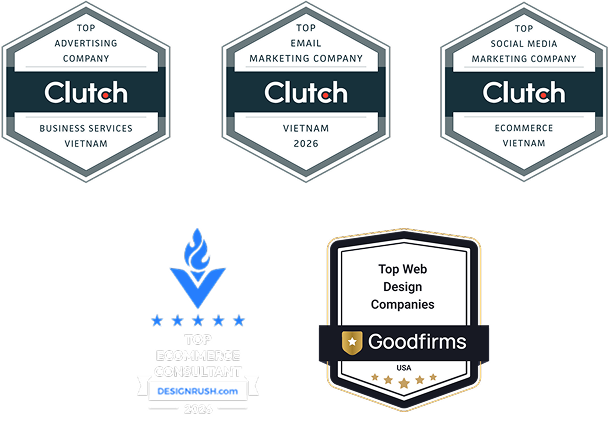
Agency websites, portfolios, and sales conversations naturally highlight their strongest work. Independent reviews and third-party agency profiles can provide another perspective.
Platforms such as Goodfirms allow businesses to explore service providers and review information and feedback outside the agency’s own website. You can also view IMP Marketing’s Goodfirms profile for additional information about our services and client experiences.
Do not focus only on the overall rating. Look at what clients repeatedly mention, whether any concerns appear more than once, and how the agency responds when feedback is less positive.
Third-party reviews should not make the decision for you, but they can add useful context to what you learn directly from the agency.
2. Ask for Relevant Case Studies and Client References
Do not evaluate case studies only by the size of the revenue increase or ROAS shown in the headline.
Look for examples that are relevant to your situation. The strongest case studies should explain where the business started, what problem needed to be solved, what the agency changed, and what happened afterward.
Experience with businesses at a similar growth stage, with a similar business model, or facing similar challenges can often be more useful than a big result from a completely different situation.
For a significant long-term engagement, you can also ask whether it is possible to speak with a past or current client. This can help you understand areas that a case study cannot easily show, such as communication, reliability, responsiveness, and how the agency handles difficult periods.
3. Meet the People Who Will Actually Work on Your Business
The people involved in the sales process are not always the same people who will manage your account after you sign.
Before making a decision, understand who will be responsible for strategy, execution, communication, and reporting. If possible, meet the key people who will work with your business.
This gives you a better sense of the team’s experience and whether communication feels clear and collaborative.
It also helps prevent a situation where you choose an agency based on a strong senior sales team but have little understanding of who will actually be responsible for the work.
4. Ask How the Partnership Will Actually Work
A good partner should be able to explain what happens after the contract is signed.
Ask how onboarding works, what information they need from you, how priorities are decided, how often performance is reviewed, and what happens when something is not working.
You can also ask them to walk you through what the first 30, 60, or 90 days could look like.
You do not need access to every internal process or or standard operating procedure. What matters is whether the agency has a clear way of moving from understanding your business to identifying priorities, executing work, reviewing results, and adjusting the strategy.
5. Pay Attention to the Questions They Ask You
One of the easiest ways to evaluate a potential growth partner is to pay attention to the discovery process itself.
Before recommending a strategy, the agency should want to understand your customers, products, margins, acquisition costs, retention, previous marketing efforts, operational constraints, and growth goals.
The questions should become more specific as the conversation develops.
If most of the conversation is about the agency’s services and very little is about how your business actually works, you may want to dig deeper before making a decision.
A good growth partner should be trying to understand the problem before trying to sell you the solution.
Final Thoughts
Choosing the right growth marketing agency means finding a team that understands your business, brings relevant eCommerce experience, and works closely with you to solve growth challenges.
Before making a decision, look beyond the service list and sales pitch. Pay attention to how the agency thinks, communicates, measures performance, and approaches the partnership.
A strong partner should be able to support your current priorities while also helping you identify the next areas that can drive growth.