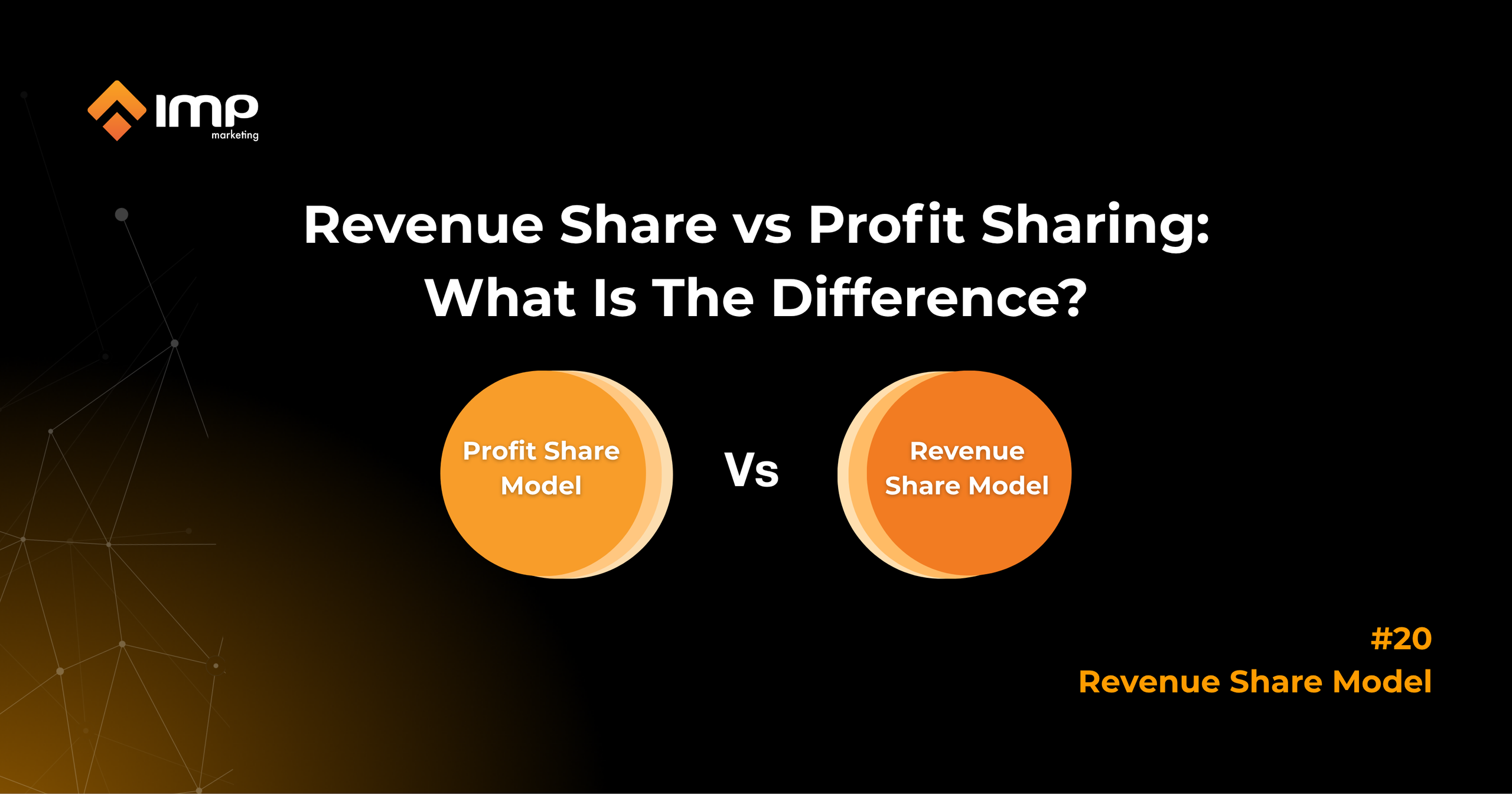
Revenue Share vs Profit Share: What Is The Difference?

In both models, compensation is tied to business performance. When the business does well, the partner earns more. When the business faces a difficult stage, the partner also shares in the risk.
But in practice, they work very differently.
The biggest difference is simple:
Revenue share is based on the partnership’s revenue. Profit share is based on the profit left after costs.
That difference affects what each model measures, what incentives it creates, which business models it fits, and how much transparency both sides need.
1. Revenue Share and Profit Share Measure Different Things
With profit share compensation is based on profit after certain costs have been deducted from revenue.
This means both sides need to agree on which costs are included. These costs may include media costs, salaries, refunds, platform fees, logistic fees, payment fees, inventory, customer service, and other operating expenses.
For founders, this can create more reporting work. They may need to explain normal business costs because those costs affect how much the partner gets paid.
For agencies, this can also be hard to verify. Many cost decisions happen inside the business. The agency may not know whether the numbers are being counted the same way each month.
Revenue share is simpler. Compensation is based on revenue. Both sides are often looking at the same numbers from Shopify, Amazon, or other reporting dashboards. Because revenue is easier to measure, there is usually less discussion about expenses and more focus on growth.
2. Each Model Creates a Different Level of Motivation
Profit share encourages both sides to think about revenue and cost control.
This can work well when both sides influence how the business is operated. But it becomes difficult when the agency does not control the company’s costs. For example, a marketing agency may help a brand increase sales. The agency can influence ads, landing pages, offers, creative, and conversion rate. But they may not control inventory costs, warehouse fees, hiring decisions, or internal operating expenses. If compensation is based on profit, the agency’s reward can be affected by costs it does not control.
Revenue share creates a more direct motivation.
As we discussed in “What Really Motivates a Revenue Share Marketing Agency” this model gives the agency more reason to think and act like a growth partner. The agency has more skin in the game because its upside is tied directly to the revenue it helps create.
When the partner helps generate more revenue, the reward is easier to see. This can create stronger daily motivation for teams focused on growth, sales, or marketing.
3. Different Business Models Fit Different Structures
Ecommerce is different. Profitability is influenced by many operational decisions that sit outside the agency’s control.
For example, a brand may decide to purchase six months of inventory before a major sales season. Revenue may continue growing, but profit could temporarily decrease because more cash is being invested into stock. In this situation, the agency’s compensation may be affected by an inventory decision it did not control. Therefore, profit share is financially unfair to the marketing team.
Instead, ecommerce has two characteristics that make a Revenue Share model easier to implement, as we discussed in “Why Is eCommerce The Perfect Fit For Revenue Share Model?”.
First, ecommerce transactions are highly automated. Customers see an ad, click, browse, choose a product, and pay. The journey has less human involvement, fewer manual errors, and lower risk of lost sales from follow-up.
Second, ecommerce data is clear and traceable. Every customer action leaves a signal. Both sides can see ad spend, revenue, product performance, checkout behavior, and repeat purchases. This makes it easier to measure what is working, fix weak points, and scale growth.
That is why revenue share is more practical for growing ecommerce brands. Revenue is easier to track, easier to verify, and less affected by operational decisions outside the marketing team’s control.
That has also been our experience at IMP, a revenue share marketing agency for ecommerce brands.
After years of working with ecommerce brands, we have found that revenue share structures are often easier to operate in practice. Both sides can spend less time discussing expenses and more time focusing on growth.
For many growing ecommerce brands, revenue share provides a simpler framework. It gives both sides a clear number to work from. When the measurement is simple, it becomes much easier to focus on growing the business.
Conclusion
Revenue share and profit share are both tied to business performance, but they measure different things.
Profit share is based on profit after costs. This means both sides need to understand and agree on how costs are tracked. It can work well when financial reporting is clear and both sides have influence over business operations.
Revenue share is based on revenue generated by the partnership. This makes the model simpler to measure, especially for ecommerce brands where transactions and data are easier to track.
If you want to understand why this model changes the way agencies think and operate, read our article.
Revenue Share Model FAQ
1. Why is revenue share easier to measure in eCommerce partnerships?
Revenue share is easier to measure in eCommerce partnerships because revenue data is usually clearer and more accessible. Revenue Share Marketing Agency and Founders can review the same numbers from Shopify, Amazon, or other eCommerce dashboards. This makes the revenue share partnership easier to manage because compensation is based on a clear revenue number instead of multiple operating cost calculations.
2. Why does revenue share reduce conflicts around operating costs?
Revenue share reduces conflicts around operating costs because compensation is calculated from revenue, not profit after expenses. In eCommerce, costs such as inventory, logistics, salaries, refunds, and platform fees can change often and may sit outside the agency’s control. Revenue share helps both sides focus more on growth instead of debating which costs should affect the agency’s payout.
3. Why is revenue share more practical for growing eCommerce brands?
Revenue share is more practical for growing eCommerce brands because ecommerce transactions are more automated and easier to track. Customers can see an ad, click, browse, buy, and return for repeat purchases, while both sides can review the same sales data. This makes the revenue share partnership easier to verify, manage, and scale over time.