eCommerce Email Marketing: How Email Contributed 33% of Store Revenue

Our approach to eCommerce email marketing combines signup popups, automated follow-ups, and monthly campaigns to help stores generate more sales through email. For a Canadian food packaging supplier, we combined this approach with a website revamp, helping email contribute 33% of store revenue. Here’s how we did it.
← SWIPE HORIZONTALLY TO VIEW FULL TABLE
| Industry | Eco-friendly food packaging for F&B businesses |
|---|---|
| Platform | Shopify and Klaviyo |
| Capability | Signup popups, email automation, and monthly email campaigns |
| Client Market | Canada |
| Key Result | Email revenue share increased by 33 percentage points, and email click-through rate increased 7x over 12 months |
The Context: Growing Repeat Sales Through eCommerce Email Marketing
Our client is a growing supplier of affordable, eco-friendly food packaging to F&B businesses across Canada. The business already had an online store, an existing customer base, and growing demand for its products.
For F&B businesses such as restaurants and cafés, food packaging is used frequently and needs to be purchased repeatedly. Recognizing the opportunity, the brand wanted to turn more website visitors into buyers and encourage existing customers to reorder, building email into a consistent revenue channel.
The Challenge: Building a Structured eCommerce Email Marketing Program
Despite having products with strong potential, the brand struggled to turn website traffic into purchases. Two gaps needed attention:
- Its website visuals and product catalog did not fully reflect the quality of its offering.
- Its eCommerce email marketing lacked a clear structure for following up with interested visitors and encouraging existing customers to reorder.
Because customers regularly needed to restock packaging, we saw an opportunity to use relevant emails and timely follow-ups to stay connected between purchases. This case study focuses on the email program we built, from signup popups and automated flows to monthly campaigns.
The Execution: How We Built the Brand’s eCommerce Email Marketing Program
1. Setting Up Popups to Capture Email Subscribers
When we analyzed the website, we found that some visitors left without purchasing. To avoid losing the opportunity to reach these potential customers, we used signup popups to give them a reason to leave their email address. New subscribers then entered automated email flows to encourage purchases and build customer loyalty.
Beyond growing the brand’s email list, we wanted to learn which benefit would motivate these shoppers to sign up and use that insight to guide the brand’s eCommerce email marketing.
Testing Three Different Offers
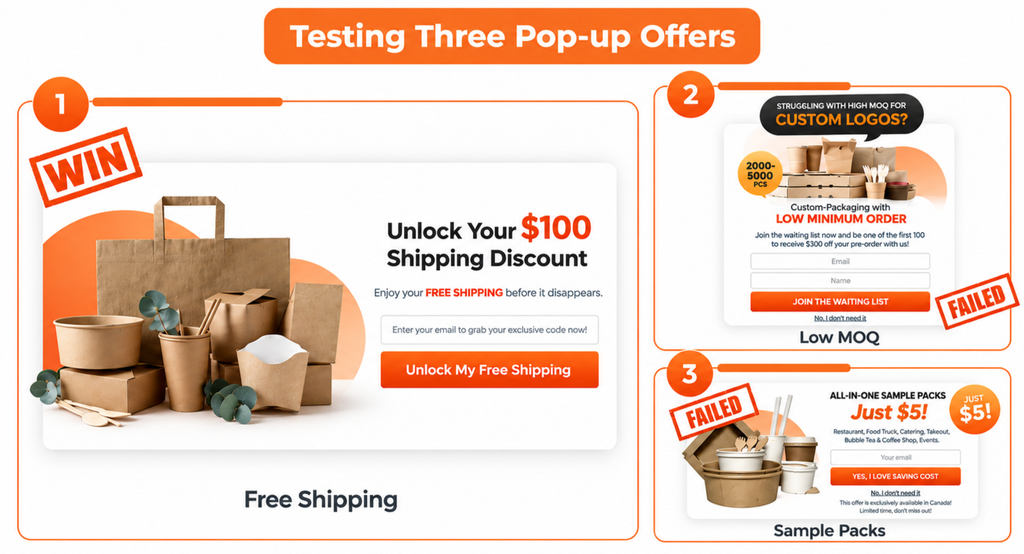
We tested three popup offers to understand which benefit would encourage visitors to share their email address. Each offer addressed a different potential customer need.
← SWIPE HORIZONTALLY TO VIEW FULL TABLE
| Popup Offer | How We Presented It | What We Wanted to Learn |
|---|---|---|
| Free Shipping | Highlighted free shipping as the incentive to sign up. | Would saving on delivery encourage more visitors to subscribe? |
| Low MOQ | Promoted custom-logo packaging with minimum orders of 2,000–5,000 pieces. Visitors could join a waiting list, with $300 off a preorder for the first 100 customers. | Would smaller custom packaging orders and a preorder discount attract potential buyers? |
| Sample Packs | Offered an all-in-one sample pack for $5, allowing businesses to try different packaging products before placing a larger order. | Would an affordable way to evaluate the products encourage visitors to subscribe? |
Submission results favored the Free Shipping popup, while the Low MOQ and Sample Packs versions underperformed. This suggested that saving on shipping was a more compelling signup incentive for the visitors reached during the tests. The finding also gave us a direction for future campaigns, with greater emphasis on free shipping offers.
Using the Results to Guide Further Optimization
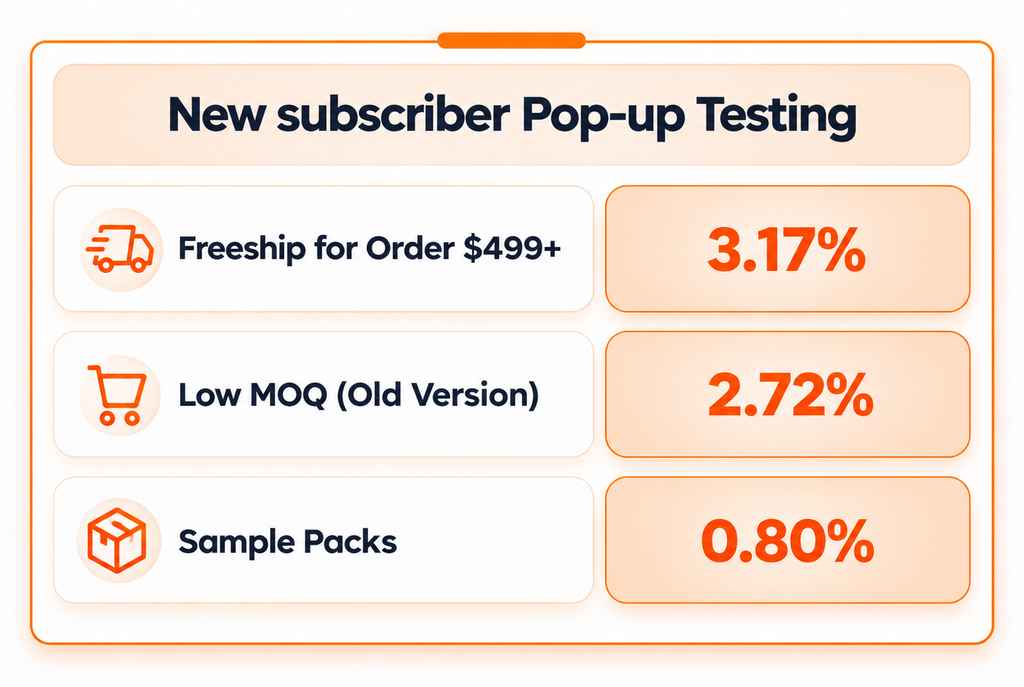
The Free Shipping popup achieved the highest submission rate at 3.17%, compared with 2.72% for Low MOQ and 0.80% for Sample Packs. These results suggested that shipping savings were the strongest signup incentive among the three offers tested
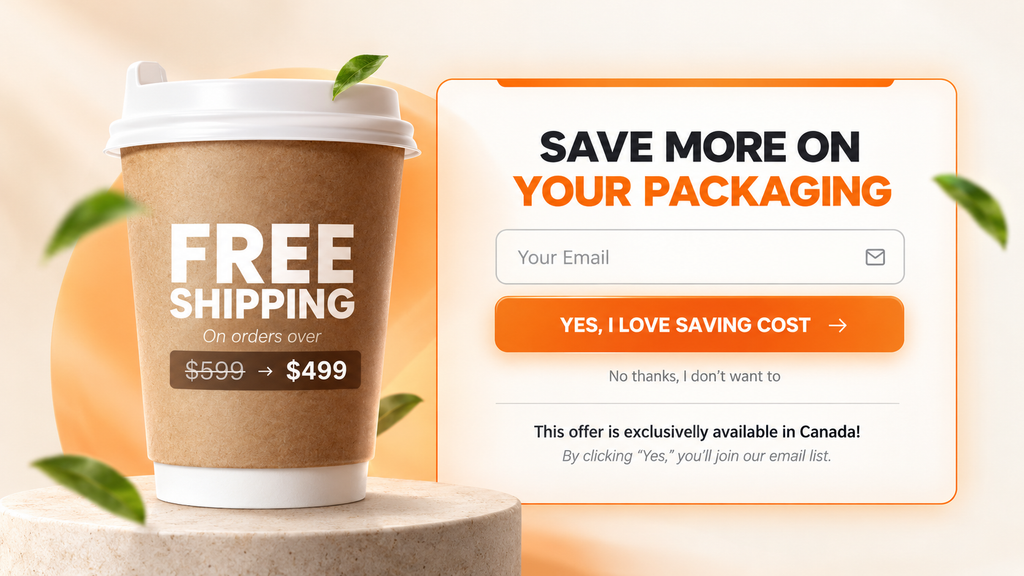
Based on these results, we selected Free Shipping as the main popup offer. The version below highlighted free shipping on orders over $499, with the savings message and order threshold clearly displayed alongside the email signup field.
2. Building Automated Email Flows to Convert and Retain Customers
At IMP Marketing, we built automated email flows to follow up with new subscribers, remind shoppers about unfinished purchases, and encourage customers to reorder. We tailored the messages to F&B founders and operators buying packaging for their businesses, with content about subscriptions, bundles, and services relevant to their recurring needs.
Welcome Series: Turning New Subscribers into First-Time Buyers
After visitors subscribed, we created a three-email welcome series for new subscribers exploring the brand’s packaging options.
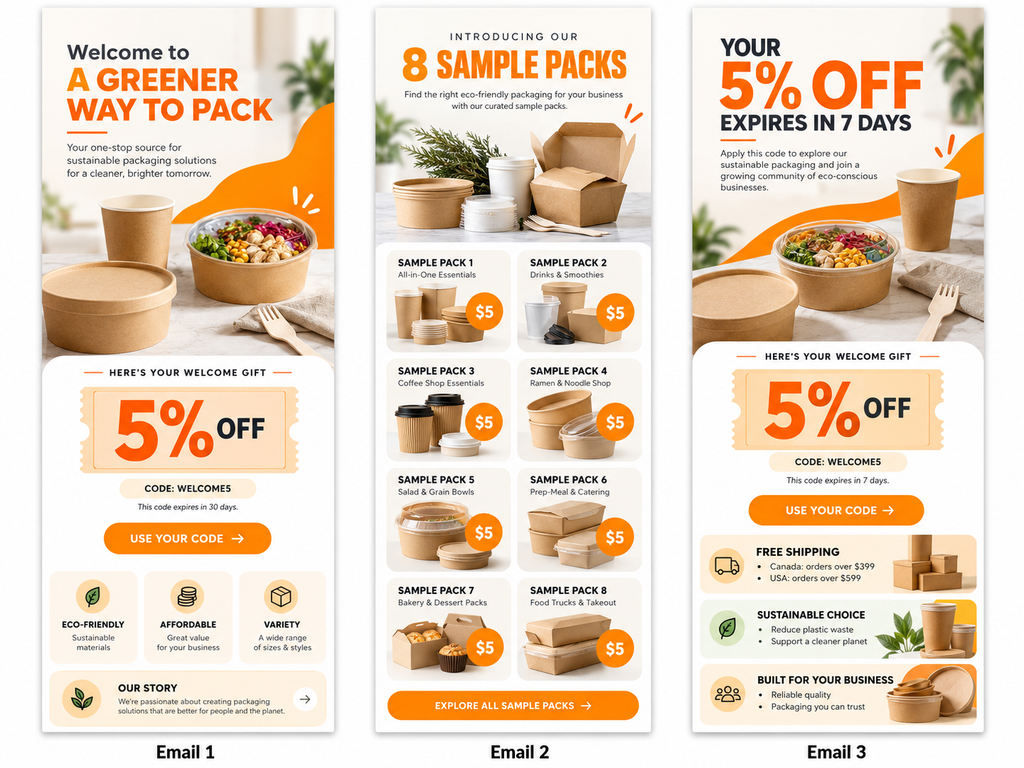
The first email introduced the brand, highlighted its key selling points, and offered a 5% discount code to encourage a first order.
Three days later, the second email introduced subscription options, free shipping, and bundle promotions, alongside a reminder of the discount. This gave subscribers more ways to find an offer that suited their purchasing needs.
After another 20 days, we checked whether subscribers had ordered since entering the flow. Those who had purchased exited the sequence. Those who had not received a final reminder to use their discount before it expired.
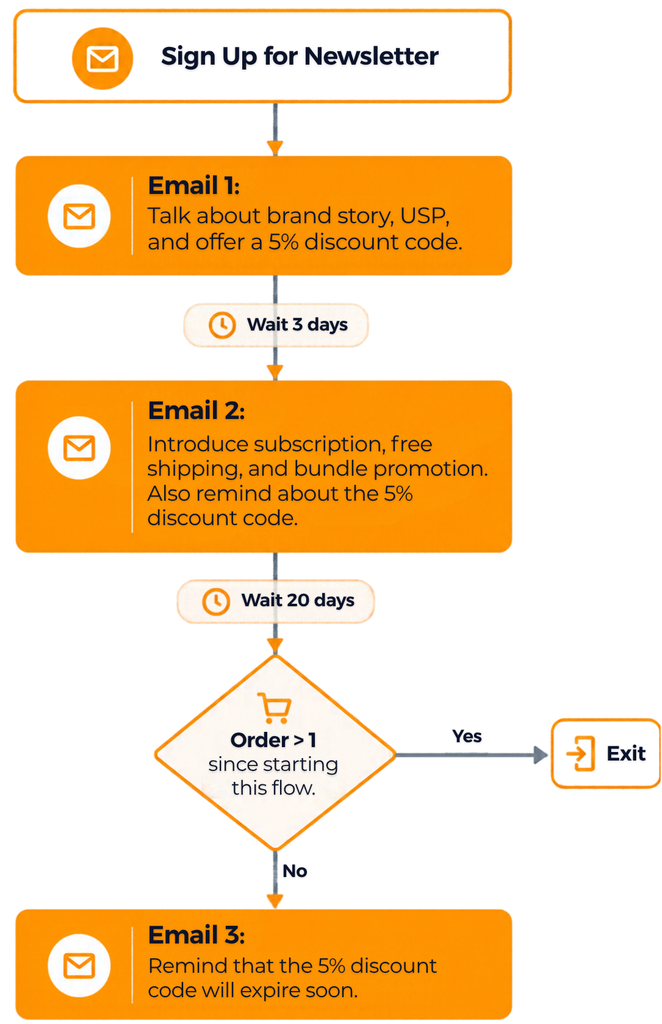
The sequence moved from introducing the brand to explaining the available offers, then giving non-buyers a final reminder to act. The email examples below show how we presented these messages.
Abandoned Checkout: Bringing Buyers Back to Complete Their Orders.
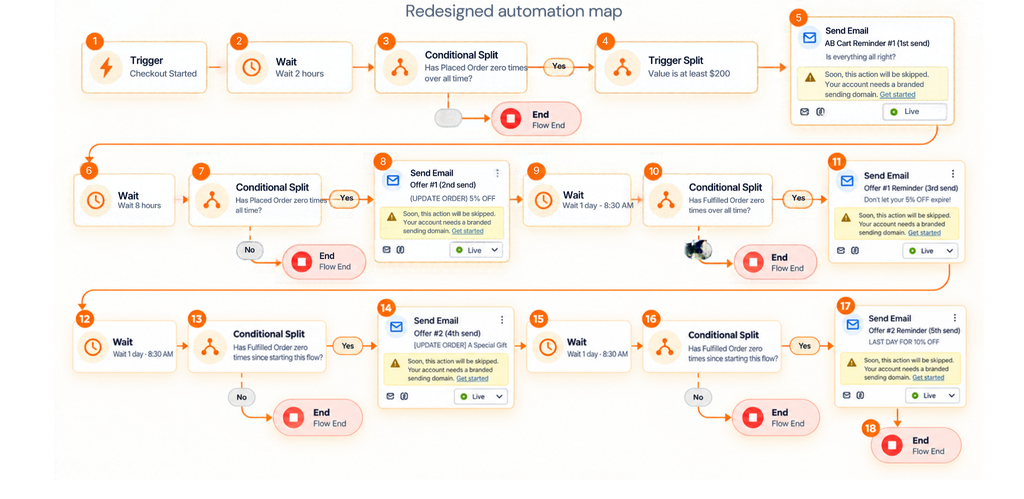
Some visitors had already selected products and started checkout but left before completing their purchase. We built an abandoned checkout flow to remind these potential buyers of their pending orders, offer support, and encourage them to return.
The flow began two hours after checkout started and split buyers into two groups:
- New customers with checkout values of at least $200
- Returning customers with checkout values of at least $799
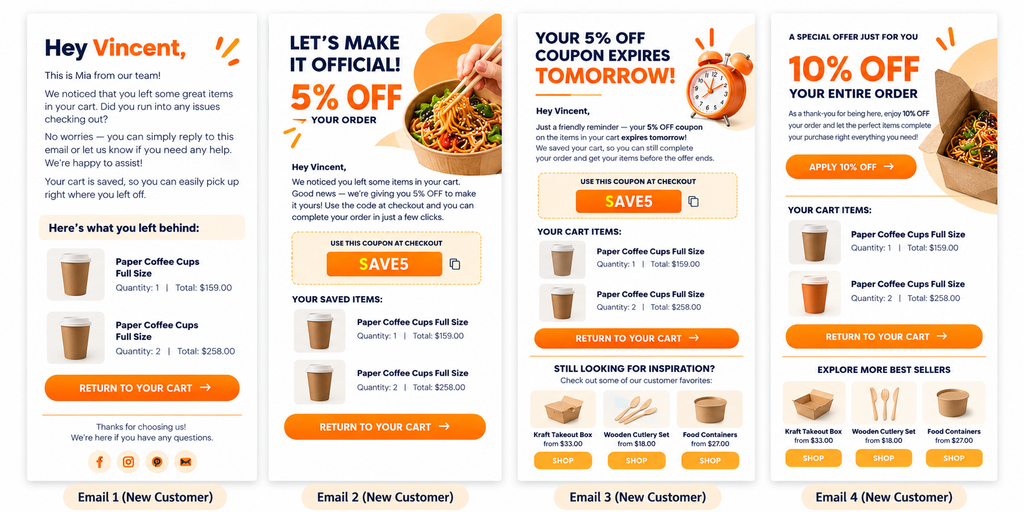
For new customers, the five-email sequence started with a personal message asking whether they had experienced any problems checking out. It included the products left behind and a direct link back to the cart. We began with assistance before introducing a discount, giving buyers a chance to resolve any questions first.
The next email followed eight hours later with a 5% discount, followed by an expiry reminder. Later messages introduced a 10% offer framed as a gift from the founder, ending with a final reminder. Subsequent emails were scheduled for 8:30 a.m. after the specified waiting periods.
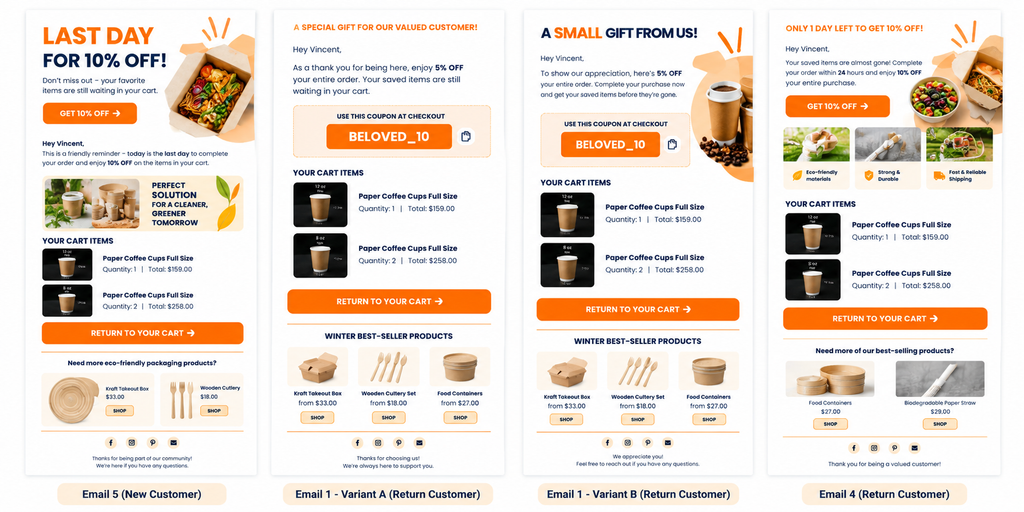
The email designs combined personal messages with product images, offer details, and a clear “Return to Your Cart” button. Showing the items buyers had selected made the reminder specific to their pending purchase.
Returning customers received a shorter, two-email sequence. Since they already knew the brand, the first message focused on a 10% offer and returning to their pending order. A final reminder followed the next day at 8:30 a.m., subject to the flow’s order conditions.
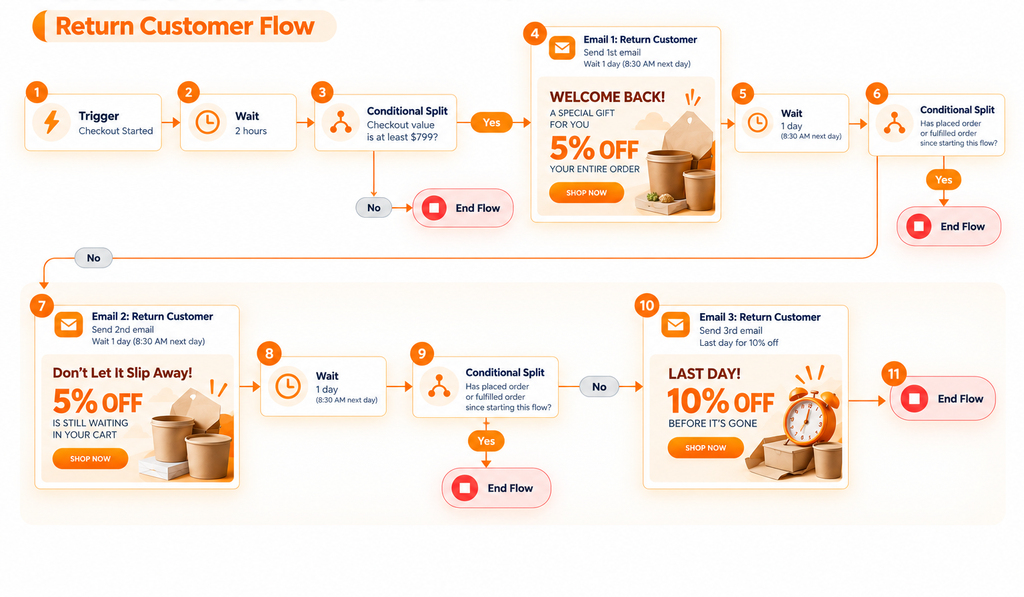
We also prepared two versions of the first returning-customer email. Both presented the founder’s offer, with different wording and layouts. These provided alternatives to test, although the supplied materials do not show which version performed better.
Customer Thank-You: Building Relationships After a Purchase
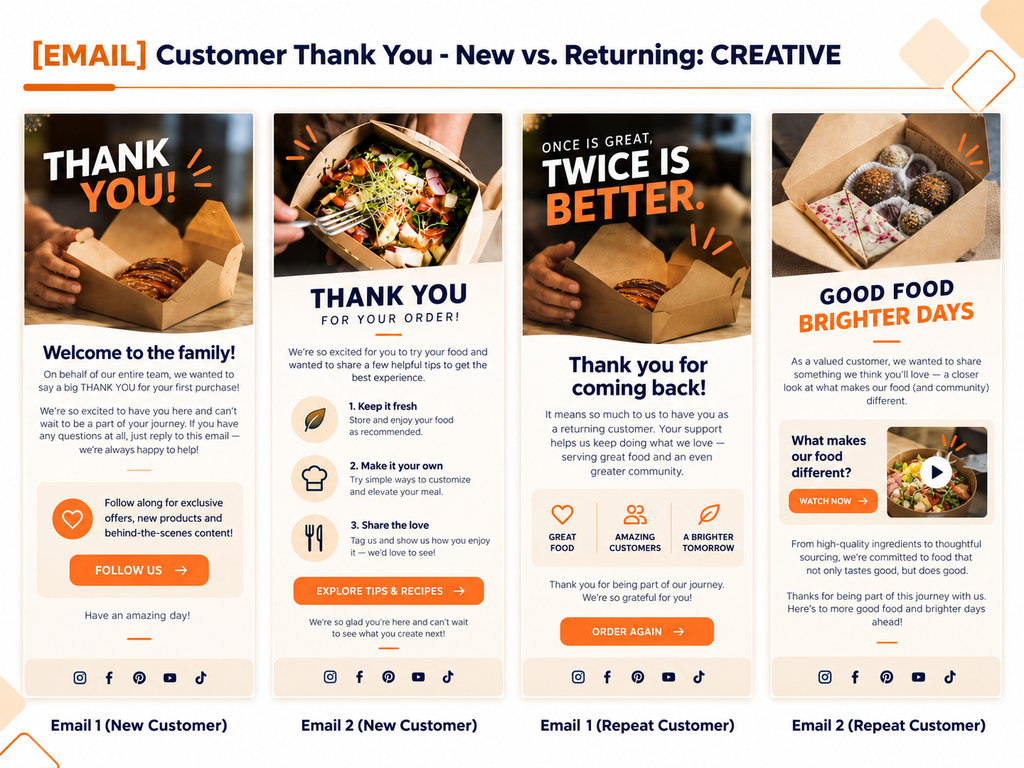
We built a thank-you flow to acknowledge their purchase, offer useful information, and encourage an ongoing relationship with the brand.
In the initial setup, the flow split customers into two groups: new and returning buyers.
New customers received a welcome and thank-you email offering help and inviting them to follow the brand on social media. A day later, a second email shared tips for reducing plastic use in restaurants and cafés.
Returning customers received a thank-you message acknowledging their repeat purchase and asking for feedback. Seven days later, another email shared the brand’s story and introduced its subscription offer.
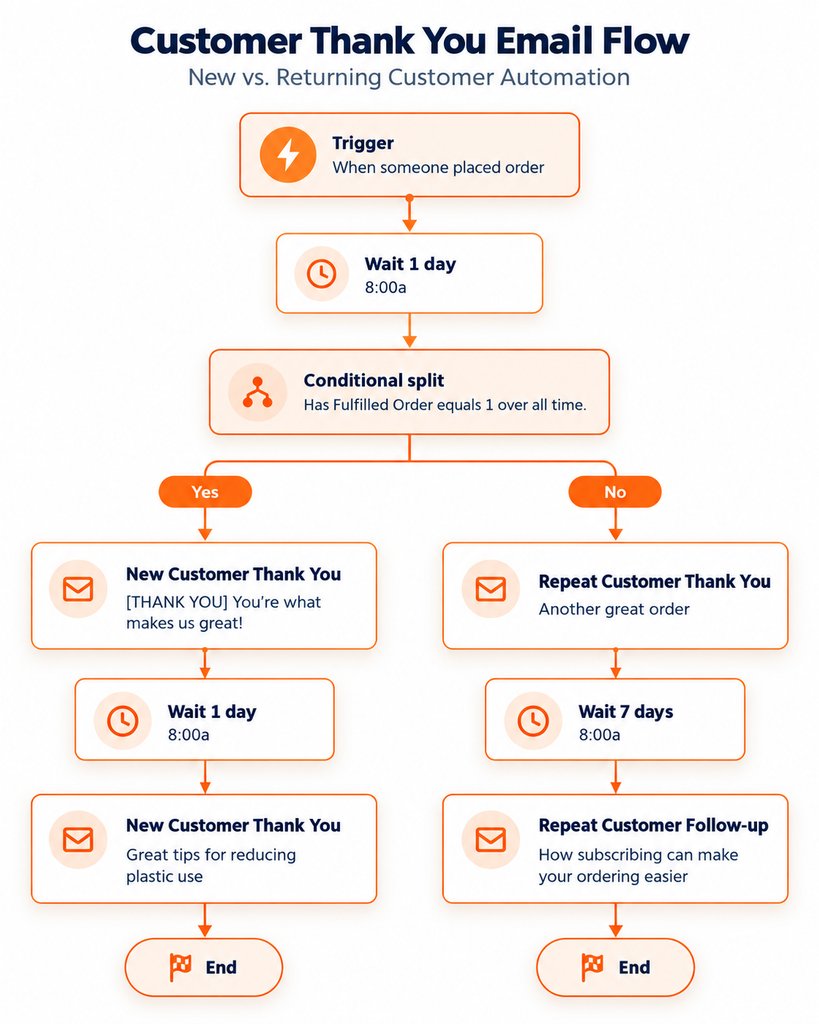
The initial flow treated all returning customers the same, so frequent buyers could receive introductory content they had already seen.
We therefore proposed sending it immediately and tailoring follow-ups to each customer’s total order count. This would make the content better match their buying behavior and familiarity with the brand. Each follow-up would be more relevant to the customer’s stage in the relationship.
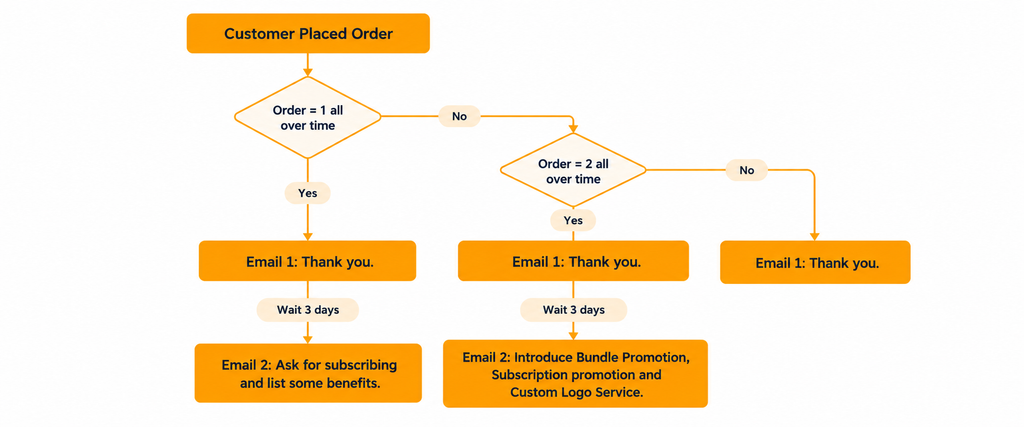
The follow-up would depend on the customer’s total number of orders across their entire purchase history:
- Exactly one order: Send a thank-you immediately, then introduce subscription benefits three days later.
- Exactly two orders: Send a thank-you immediately, then introduce subscriptions, bundle promotions, and custom-logo services three days later.
- Three or more orders: Send only the thank-you email to avoid sending too many emails and repeating introductory content.
Customer Winback: Encouraging Customers to Order Again
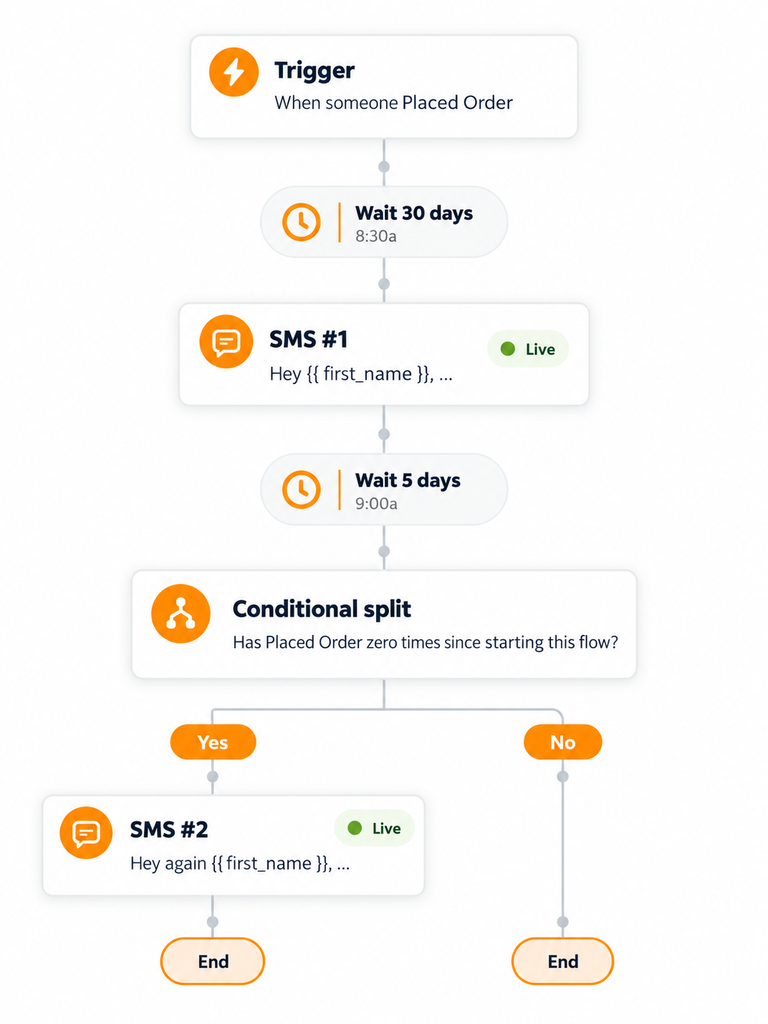
Customers who had purchased before might not return for their next order. We used a winback flow to reach buyers who had not reordered within 30 days and encourage them to purchase again.
The initial setup used two SMS messages. The first was scheduled for 8:30 a.m., 30 days after an order. If the customer still had not placed another order, a second message followed five days later at 9:00 a.m.
We proposed combining email and SMS, with the first message timed around when customers might need to restock. For example, buyers of boba straws would receive a reminder after one month, while buyers of to-go boxes would receive one after three months. These intervals were starting estimates of when customers might need to reorder, to be refined based on purchase quantities and the time between their orders.
The first email would invite customers to shop again. If they had not reordered seven days later, the next email would offer 10% off. After another seven days without a purchase, an email and SMS would remind them that the offer was ending soon. Customers would leave the flow as soon as they placed another order.
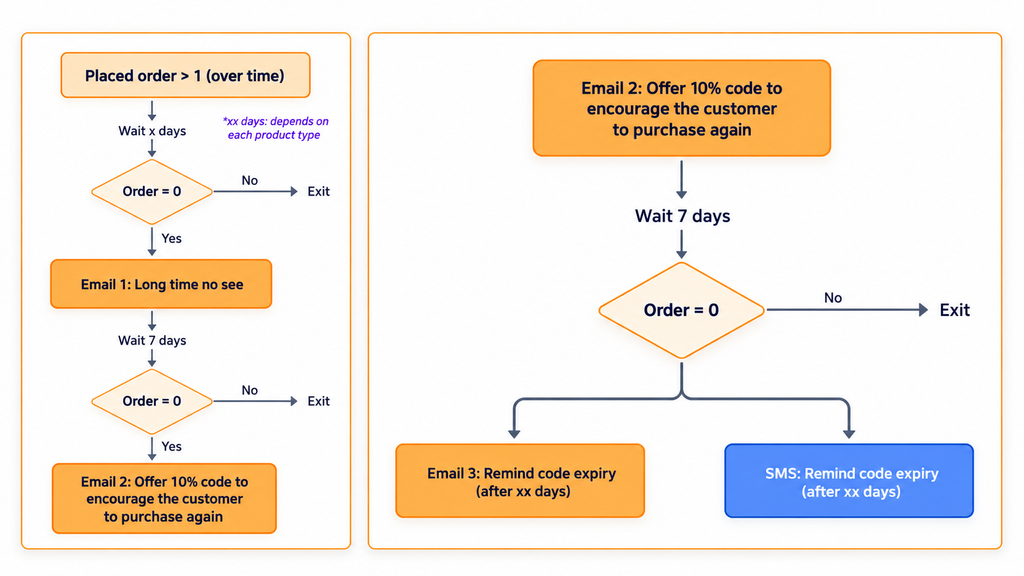
This approach aimed to make the follow-up more relevant to customers’ restocking needs while reserving the discount for those who had not responded to the first reminder.
3. Running Email Campaigns According to a Monthly Plan: Newsletters, Flash Sales, and Promotions
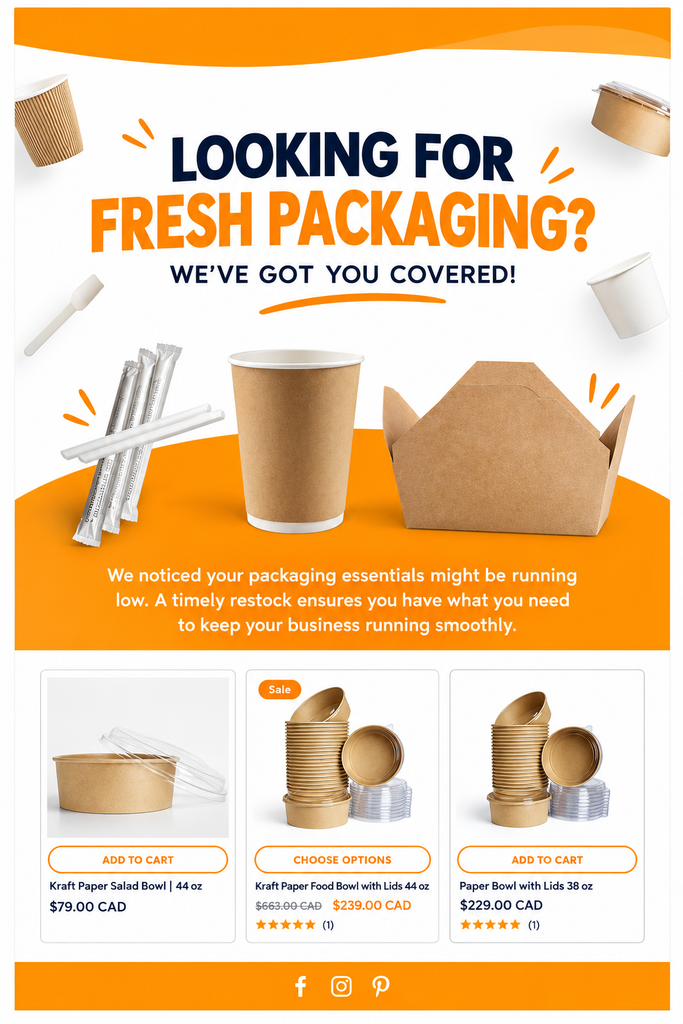
Alongside automated flows, we planned monthly email campaigns to keep subscribers informed and give them reasons to shop. We handled the copy, design, and deployment, combining useful product information with seasonal promotions and short-term offers. Each campaign had a specific role within the brand’s eCommerce email marketing program.
Newsletters: Helping Buyers Understand Their Options
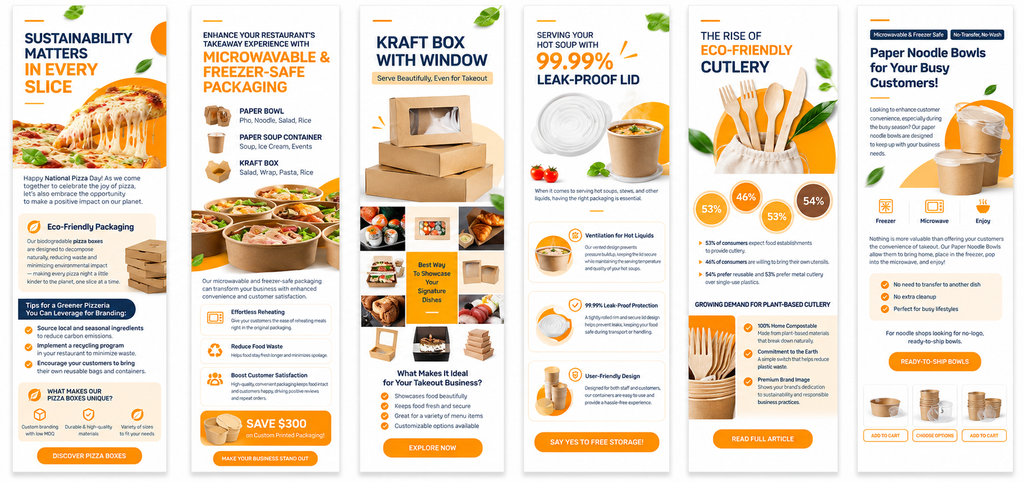
Newsletters introduced packaging products, explained their benefits, and shared updates relevant to F&B businesses. Topics included wooden sporks, coffee cup options, winter packaging, and flexible payment options. These emails helped buyers evaluate products for their businesses while keeping the brand in touch between orders.
Flash Sales: Giving Subscribers a Reason to Act Now
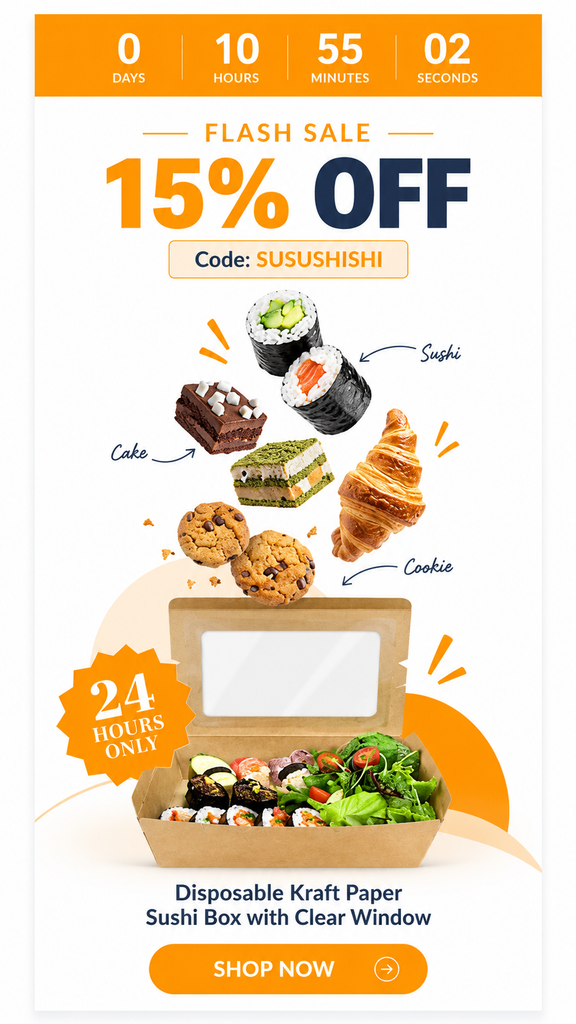
Flash sale emails focused on a clear offer within a short buying window. One example promoted 15% off for 24 hours, with a countdown, discount code, featured packaging, and a “Shop Now” button. The purpose was to make the offer easy to understand and encourage subscribers to order before it ended.
Promotional Campaigns: Connecting Offers with Seasonal Needs
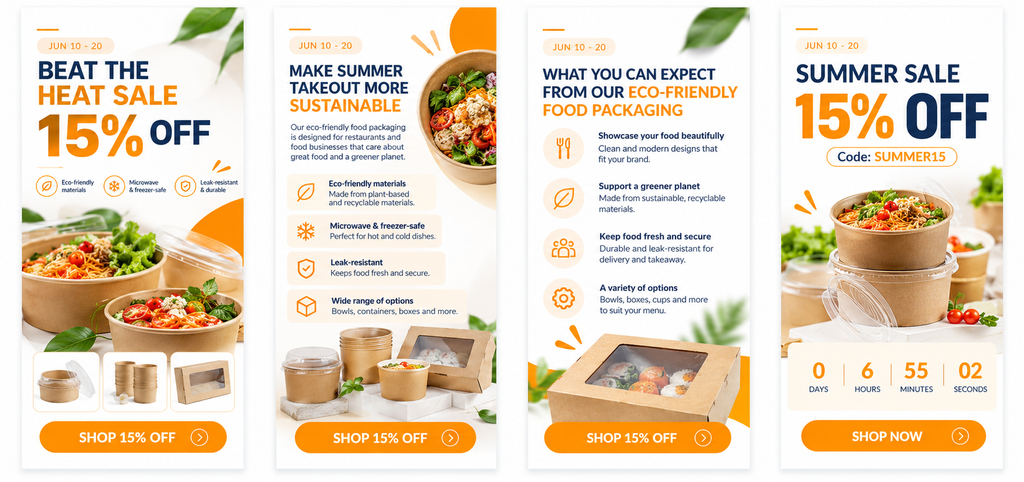
Promotional campaigns ran across a longer period and connected packaging products with seasonal demand. For the Summer Sale, we prepared a series of emails featuring 15% off, highlighting products such as food bowls, sushi boxes, and boba straws.
Each email gave a different product a closer look, explaining its features and uses. As the sale approached its deadline, the messaging shifted to a final reminder. This gave subscribers several opportunities to find relevant products and act on the offer.
The Results
Over 12 months, email became a larger part of the store’s revenue mix.
← SWIPE HORIZONTALLY TO VIEW FULL TABLE
| Metric | Result |
|---|---|
| Email’s share of total revenue | Increased by 33 percentage points |
| Email click-through rate | Increased 7x |
The increase in email’s revenue share showed that the channel was accounting for a larger proportion of sales. Higher click-through rates also indicated stronger engagement with the emails, bringing more recipients back to the website.
The business now had a connected system for capturing subscribers, following up automatically, and running regular campaigns, giving it a foundation for continued conversion and retention work.