Meta Ads Optimization: How We Increased ROAS by 187% and Cut CPA by 66%

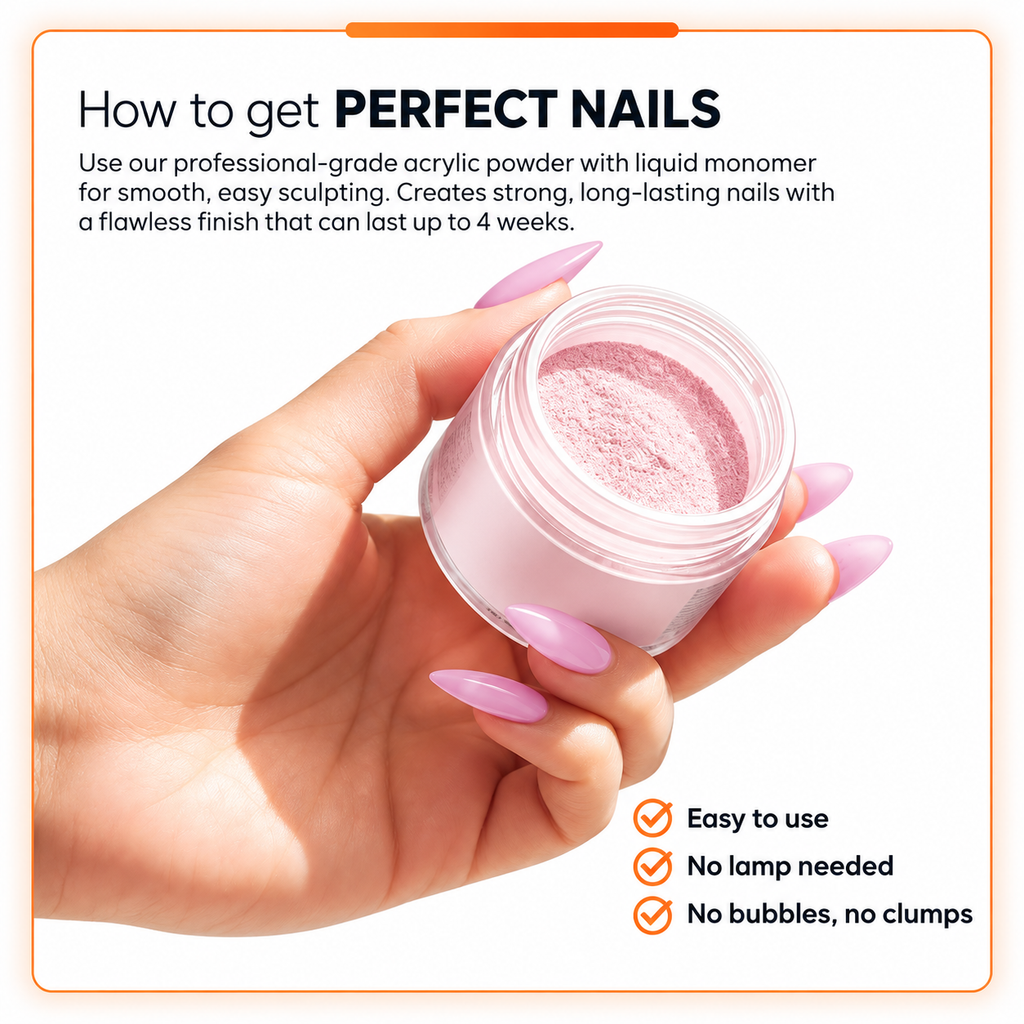
The beauty supply brand had generated most of its sales through organic channels and had not yet developed a clear Meta Ads optimization strategy.
At the early stage of paid acquisition, CPA was $86.56. For comparison, Triple Whale’s 2026 Meta Ads benchmark reports a median CPA of $39.31 for beauty supply brands, based on data from August 2025 to July 2026. That put the brand’s acquisition cost well above the broader industry benchmark and gave us a clear starting point for our Meta Ads optimization.
The Context: What Happened Before Our Meta Ads Optimization Began?
Because most of the beauty brand’s sales came from organic channels, there was still plenty of room to reach new potential customers through Meta Ads. However, the brand’s first attempts at paid acquisition did not go smoothly, with performance falling well below expectations.
When the brand first started running Meta Ads, CPA was $86.56, and ROAS was 0.70. By comparison, Triple Whale’s 2026 Meta Ads benchmark for the beauty industry reported a median ROAS of 1.54 and a median CPA of $39.31. That meant the brand was paying much more to acquire each customer while generating a much lower return on ad spend than the broader industry benchmark.
The Challenge: What Was Holding Back Brand Meta Ads Optimization?
When a campaign first launches, weaker ROAS and higher CPA are not unusual because Meta’s system still needs time to learn which audiences are most likely to convert (Meta, 2026). The challenge was how quickly we could move beyond that stage. When we took over the account, we had roughly two months to show clear improvement in both ROAS and CPA.
At the same time, the brand was relying on only a small number of creatives, so we needed to continuously find stronger customer pain points, angles, and content ideas instead of repeatedly running the same two or three ads.
So the challenge was to improve Meta Ads performance within a short timeframe while creating creative variations that could give the campaign new opportunities to perform.
The Solution: How Did We Approach Meta Ads Optimization Step by Step?
To improve performance within a limited timeframe, we broke the Meta Ads optimization into stages, with each stage focused on one specific bottleneck.
Phase 1: Establish a Clear Baseline
The first phase was about giving the campaign enough time to learn before making major changes. During these early weeks, we accepted that ROAS could remain low and CPA high while Meta was still gathering data.
We kept the campaign structure simple, used broad targeting, and prioritized video creatives. More importantly, we avoided changing or turning off creatives too early. We kept them running for 7–14 days so the algorithm had enough time to learn from audience response before we decided what should be adjusted next.
Phase 2: Improve the Creative Message
When the campaign had enough data, we shifted our focus to creative. We looked at what this audience was actually interested in watching.
In beauty, tutorial-style content, product tips, and behind-the-scenes application feel more natural than direct promotional ads. We defined the target audience as not mainly buying nail products for at-home use. Many of them were nail professionals, so they were more interested in seeing the application process, professional techniques, and practical tips they could relate to in their own work.
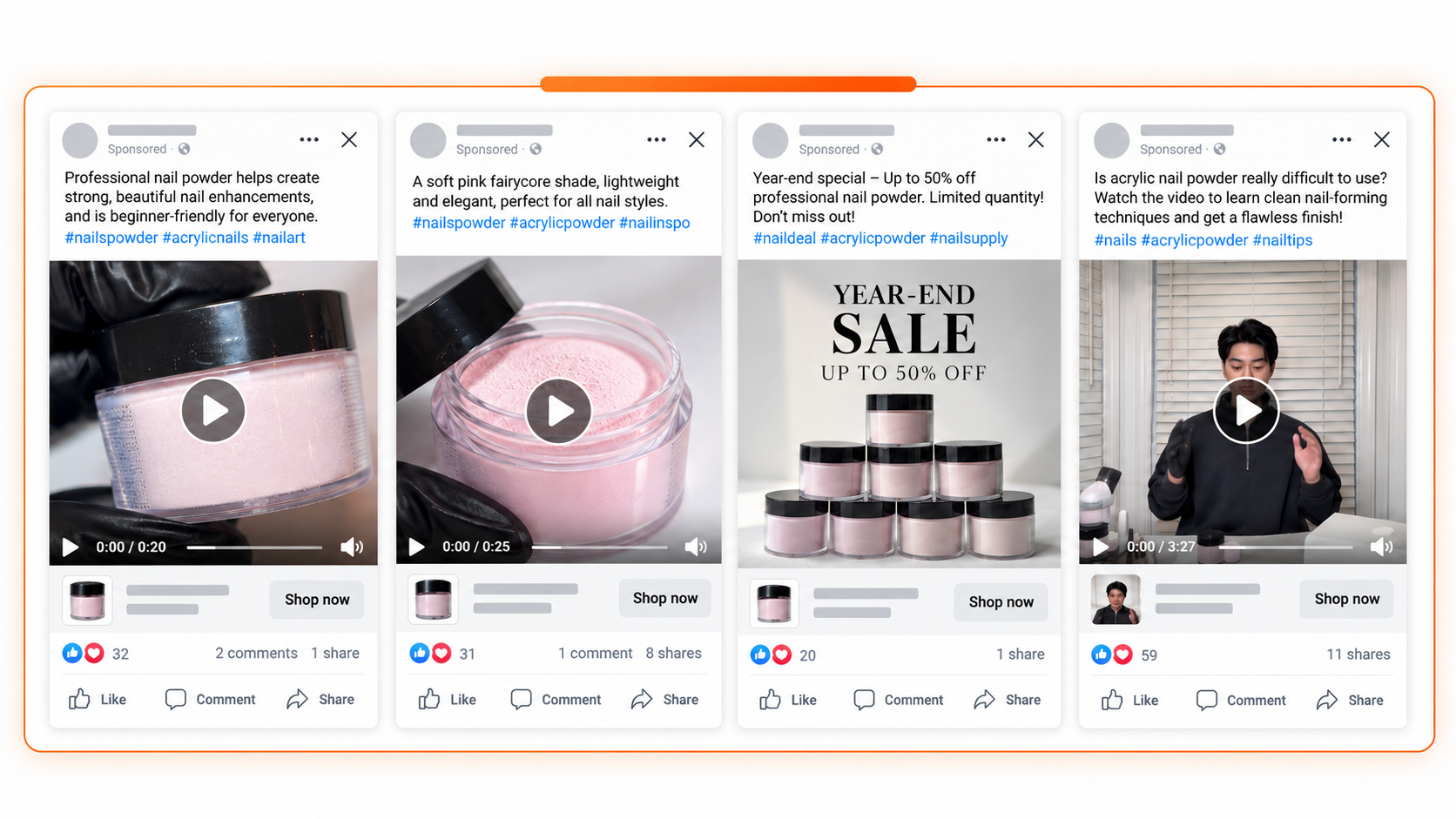
We tested creatives around specific pain points and positioning angles, with a stronger focus on tutorials, how-to videos, and professional tips. We also produced UGC-style videos, which made the content feel closer to the way nail professionals naturally share and consume content.
After identifying target audience insights and reaching the right target audience, we reviewed performance regularly, reduced spend on weaker creatives, and gave more room to the angles that were showing stronger results.
Phase 3: Improve What Happened After the Click
When the creative was doing a better job of attracting the right audience, we moved further down the funnel and focused on what happened after the click.
We continued testing new creatives and optimized the landing page for the customer journey. Product images were updated to communicate key USPs and benefits more clearly, so shoppers could understand the hero product.
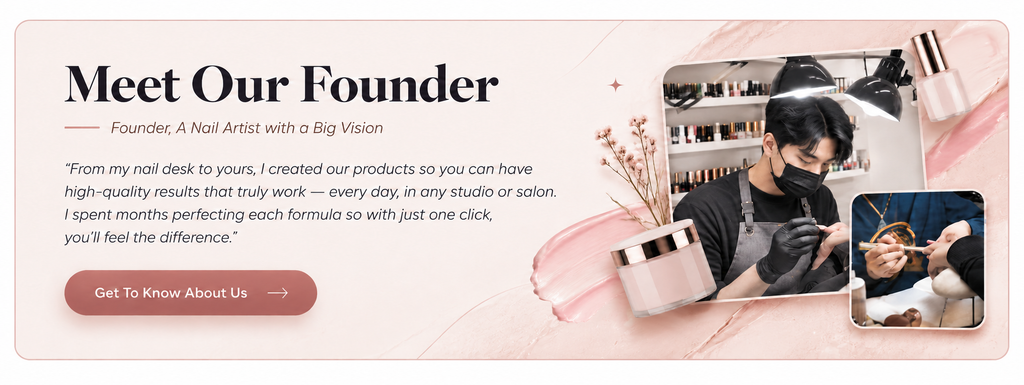
We also added the brand story, including a section introducing the brand owner. Having the CEO share more about the brand made the business feel more personal and gave shoppers more reasons to trust the people behind the products.
When the ads earned the click, the landing page needed to do a better job of turning that interest into purchase intent.
The Result: What Did Our Meta Ads Optimization Achieve?
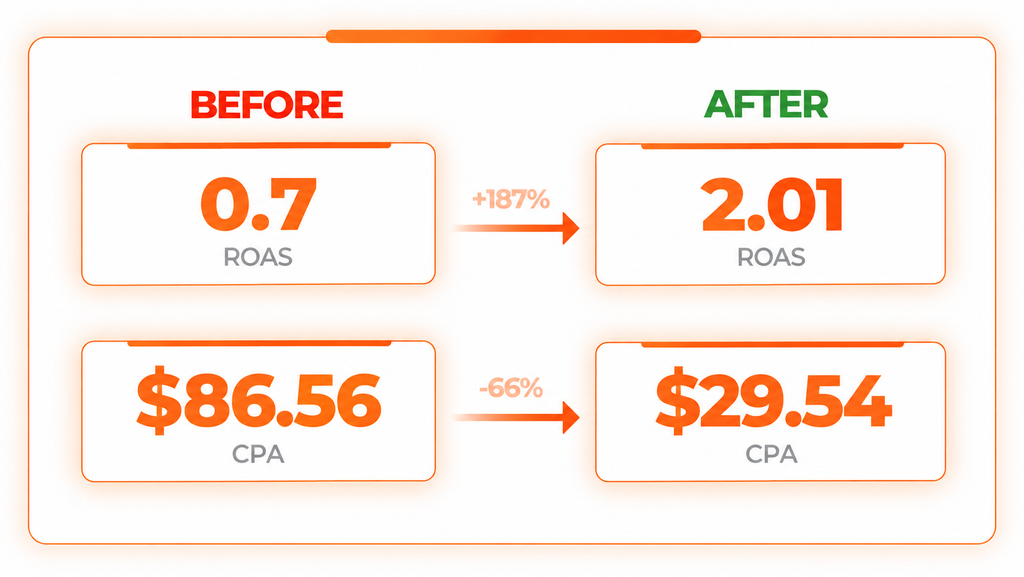
The first improvement came after we focused on creativity. ROAS increased by 64%, from 0.70 to 1.15, while CPA decreased by 35%, from $86.56 to $56.69. That told us the creative work was moving the account in the right direction, but there was still another bottleneck to solve. Compared with the beauty industry benchmark, we still needed to reach around 1.54 ROAS and $39.31 CPA.
When we expanded the optimization into the post-click experience, performance improved again. ROAS increased another 75%, from 1.15 to 2.01, while CPA fell another 48%, from $56.69 to $29.54. At this point, both metrics had moved beyond the industry benchmark.
Across the full optimization period, ROAS increased by 187%, and CPA decreased by 66% in just two months. Improving the creative helped us earn better traffic first, and improving the experience after the click helped convert that traffic more efficiently. The result showed that our Meta Ads optimization worked as a connected process.
The Lesson: What Did We Learn From This Meta Ads Optimization Process?
We learned that Meta Ads optimization works better when each bottleneck is solved in the right order.
Low ROAS and high CPA at the beginning did not automatically mean the channel was not working. First, we needed to give the campaign enough data to learn. Then we improved the creative to attract the right audience. Seeing positive signals, we moved further down the funnel and improved the post-click experience.
Many founders make the mistake of giving up too early, especially when ads do not perform well during the first few weeks. But turning campaigns off too quickly can mean losing the chance to learn what is actually holding performance back.
If you want to avoid wasting budget on Meta Ads without a clear optimization path, talk to IMP Marketing. With 14 years of eCommerce experience, we have helped clients grow by improving the entire journey end to end, from paid acquisition and creative to conversion and retention.
Quick Case Study FAQ
1. How long should you accept a low ROAS or high CPA before making changes?
Give a new campaign or creative around 7–14 days to collect enough data. For Meta Ads, around 50 optimization events within a seven-day period is commonly used as a benchmark for the learning phase. If ROAS or CPA still does not improve after two or three rounds of new creative testing, it may be time to review the offer and landing page instead of simply waiting longer.
2. Can a small brand realistically test 20+ creatives per month?
Yes. The key is to keep production costs manageable. Instead of relying on expensive studio production for every creative, small brands can use UGC, simple product videos, or content shot on a phone. This allows you to maintain a consistent testing volume without significantly increasing creative costs.
3. Can you rely on Meta-reported ROAS to make decisions?
Not entirely. Meta-reported ROAS should be compared with actual revenue data from Shopify and other analytics or attribution sources. Different platforms may attribute the same customer journey differently, so Meta ROAS should be treated as one data point rather than the only measure of performance.