Product Bundling Case Study: How We Turned the Bundle Into Nearly 3x AOV (Part 2)

In our previous case study, “eCommerce Product Strategy Case Study: How Customer Insights Led to Nearly 3x AOV (Part 1),” we explained how customer research led us to rethink that product direction and select the $98 Glass Skin Duo as the new hero bundle for women aged 40–51.
By August, AOV had reached $104.50, nearly 3x the July level, while around 41% of orders were for the Glass Skin Duo. This case breaks down the buying journey we built around the bundle to help shoppers understand its value.
The Challenge: Give Customers a Clear Reason to Choose the Bundle
The first challenge was customer education. Shoppers needed to understand how the duo related to their skin concerns and why the two products made sense together.
The second challenge was perceived value. We needed to give shoppers a clear reason to see the $98 bundle as worth choosing over a lower-priced individual product.
The Solution: Build a Product Bundling Strategy Around Customer Needs
When shoppers cannot find enough product information to judge whether a product is right for them, they may dismiss it or leave the site. The best solution is using landing pages to match the visitor’s intent, explain the value clearly, and guide them toward one focused offer (Shopify, 2026).
So we built an educational landing page that introduced the audience’s skin concerns before presenting the Glass Skin Duo as a relevant option. The goal was to help shoppers understand the products’ role before they consider the $98 offer.
1. How We Helped Customers Recognize Their Menopause-Related Skin Concerns
The first step was to help women in their 40s and early 50s recognize the skin concerns that could become more noticeable at this stage of life.
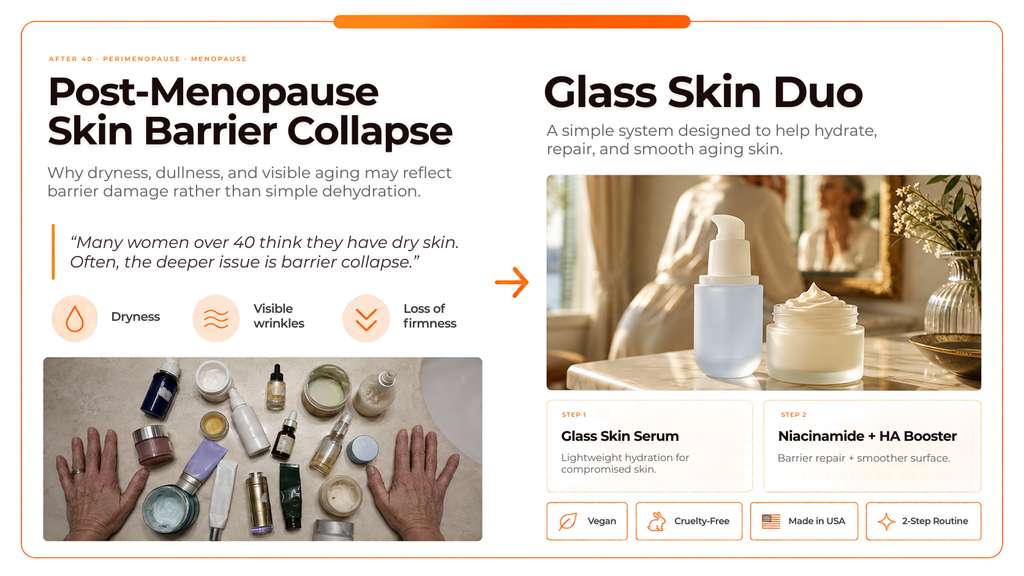
We used educational posts and paid ads to introduce concerns such as dryness, visible wrinkles, and loss of firmness. These creatives were designed to make the audience recognize a problem they might already be experiencing, rather than immediately promoting a product.
Together, the ads and listicle created problem awareness. When shoppers understood the concern and saw it as relevant to them, we could move to the next step: explaining which ingredients and products could help address it.
2. How We Used a Listicle to Connect Skin Concerns With the Bundle
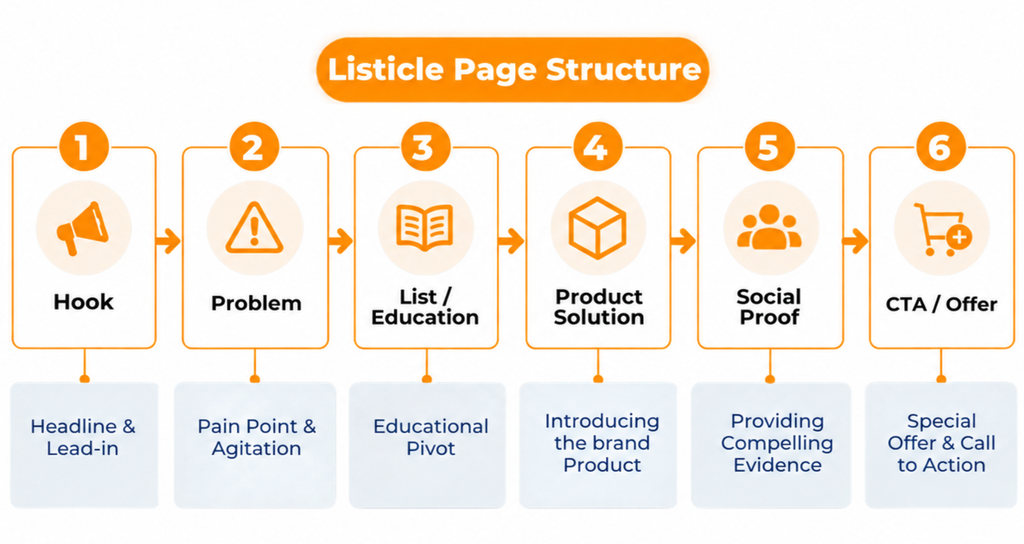
We created an educational, listicle-style landing page that introduced the relevant ingredients, explained the role of each product, and showed why niacinamide and peptides made sense together for the concerns discussed earlier.
The hook introduced the post-menopause skin changes shoppers might already be experiencing. From there, the problem section explained that the issue could be more than simple dehydration and compared common approaches such as moisturizers and multi-step routines. The education section then introduced three needs behind the proposed routine: deeper hydration, active barrier support, and surface smoothing.
After establishing that context, we introduced the product solution. Shoppers could see the role of each ingredient and understand why the two products belonged together. The Glass Skin Duo was presented as a two-step system combining the Glass Skin Serum with the Niacinamide + HA Booster.
We then added social proof to reduce uncertainty and show how other customers had experienced the products. The page ended with a clear CTA and bundle offer, supported by a 90-day guarantee to help shoppers feel more confident about the purchase.
When shoppers understood the connection between the problem, the ingredients, and the two products, they could move to the product page with more context for evaluating the $98 offer.
3. How We Executed the Listicle Flow
We began sending paid traffic to the page on July 15.
Not every shopper was ready to purchase the first time they saw an ad. Some might see the creative once or twice before becoming curious enough to learn more.
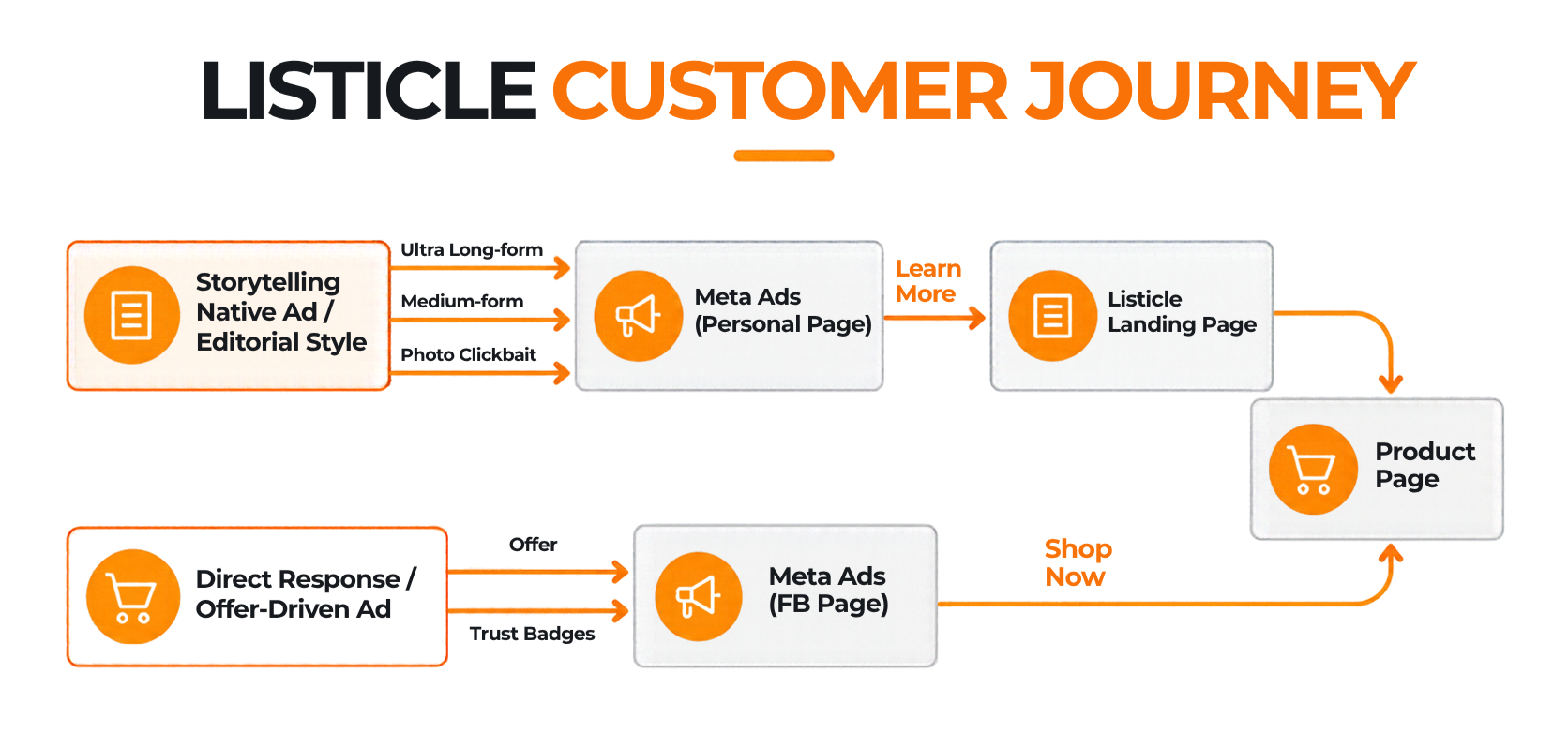
For the education-led path, we used storytelling and native editorial-style creatives. These ads could take the form of longer-form content, medium-form content, or image-led hooks designed to make shoppers curious about the skin concern. The CTA focused on “Learn More,” directing shoppers to the educational listicle first.
At the same time, we also ran a more direct-response path for ads built around the bundle offer. These creatives focused more directly on the product, offer, and trust elements, with a “Shop Now” CTA that led shoppers straight to the product page. We kept this more traditional ad-to-product-page approach running alongside the education-led path, so we could compare how the two buying journeys performed.
Both paths also gave buyers different ways to reach the same offer. Those looking for more information could explore the listicle-style article first, while buyers with stronger purchase intent could go straight to the product page.
The goal was to match the purchasing path to each buyer’s level of readiness, rather than forcing every visitor through the same journey. This setup allowed paid traffic to support both education and conversion, while keeping the Glass Skin Duo at the center of the offer.
The Result: How Did Product Bundling Change Average Order Value?
The impact became clear in the following month. In July, the store’s average order value was approximately $37. By August, it had reached $104.50, representing a nearly 3x increase.
Compared with the industry benchmark, the store’s AOV was 54% above the median for Beauty & Skincare Shopify stores. It also moved much closer to the $120 AOV level reached by the top 20% of stores in the category (Littledata, 2026).
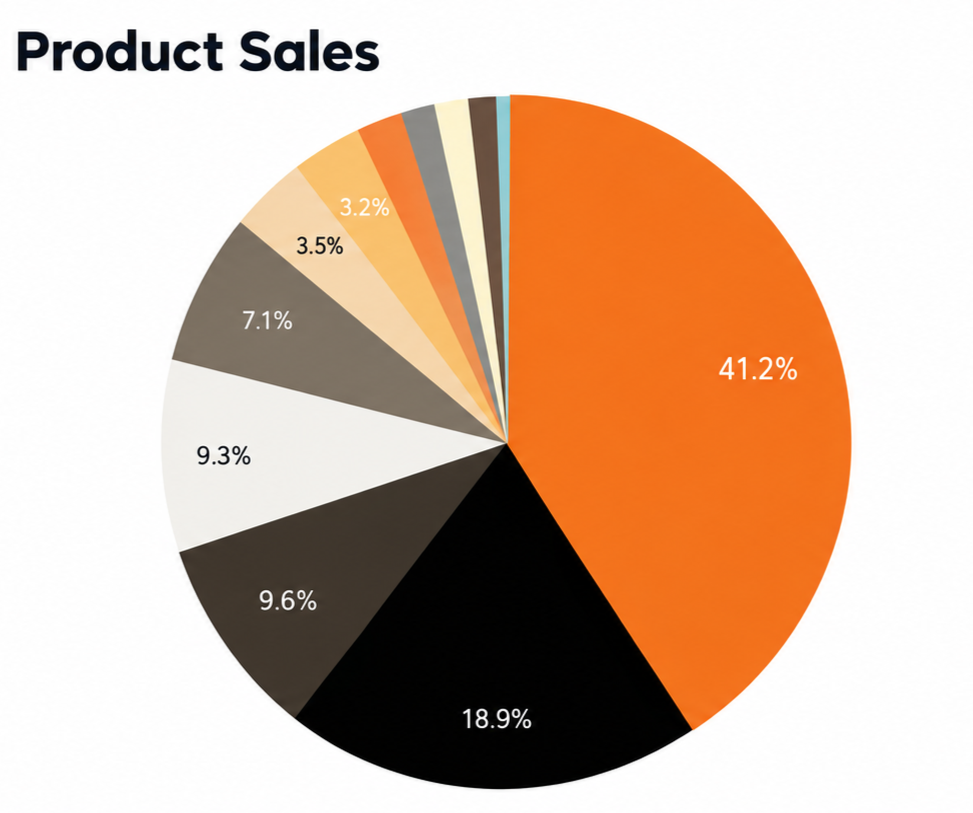
More importantly, the order mix showed that the improvement was connected to the new offer. Around 41% of orders during the period were for the Glass Skin Duo itself. This meant a share of shoppers was choosing the exact bundle we had built and educated them around.

The Lesson: What Did We Learn From This Product Bundling Case Study?
We learned that the bundle first needed to solve a customer problem that felt relevant, and the buying journey needed to explain why those products belonged together.
We built a complete education journey around the bundle, helping shoppers understand the problem, the role of each product, and the value of choosing the full routine. This gave shoppers a clearer reason to see the higher-priced offer as worthwhile.
The increase in AOV, together with the share of orders coming from the Glass Skin Duo, gave us a clear signal that this approach was working.
If you want to explore how customer insight, product bundling, and the buying journey could work together for your store, connect with IMP Marketing.
Quick Case Study FAQ
Does product bundling always increase AOV?
Not automatically. Putting several products together does not create value by itself. The products should complement each other, and shoppers still need a clear reason to buy them together.
Why did we use a listicle instead of a normal product page?
The bundle required a bigger jump from the brand's typical single-item purchase. The educational format gave us more room to explain the customer problem and the role of each product before presenting the $98 offer.
How should brands decide which products to bundle?
Start with the customer need rather than simply choosing products you want to sell more of. In this case, the strongest opportunity came from identifying a relevant skin concern first and then building the product combination around it.
Can product bundling help with paid acquisition?
It can give a brand more room to work with by increasing the value of a successful order. But the bundle still needs to convert. Increasing the price of the offer without increasing its perceived value can create a different conversion problem.