How Do eCommerce Trust Signals Help Reduce Checkout Abandonment?

eCommerce trust signals help shoppers understand who they are buying from, where their order is coming from, and what they can expect after placing it. When those signals are unclear, uncertainty can continue all the way to checkout.
When IMP took over the client account, we started with a broader website audit. That audit uncovered two related issues: Google Ads had been restricted because key business information was not clear enough, while customers were repeatedly asking about the US warehouse and delivery timing. These signals showed that the website was not fully communicating the business and fulfillment setup already behind the store.
We worked through those gaps across the website. After the updates, shipping-related questions dropped to zero, while checkout abandonment fell from 35% to 28%.
The Context & Challenge: What Did the Audit Reveal About the Store’s eCommerce Trust Signals?
The client was a household goods brand selling in the US, with inventory already stocked in a US warehouse. The business already had the infrastructure to serve US customers, but several important eCommerce trust signals were not clearly visible on the website.
The first major signal came from Google Ads. During our audit, we found that Google Ads had been restricted because the website did not clearly show key business information, including a business address. You can see that Google’s advertising policies emphasize the need for clear, up-to-date contact details, so the missing information on the client’s website became a gap that contributed to the restriction.
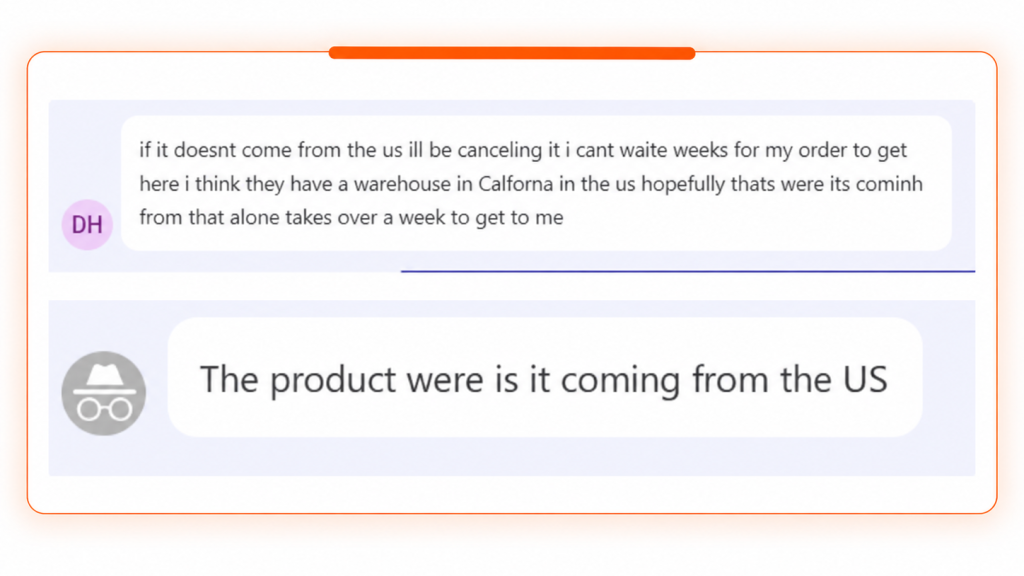
At the same time, customer feedback showed a similar gap from the shopper side. Live chat repeatedly received questions about whether the products were stored in the US, where orders would ship from, and how long delivery would take.
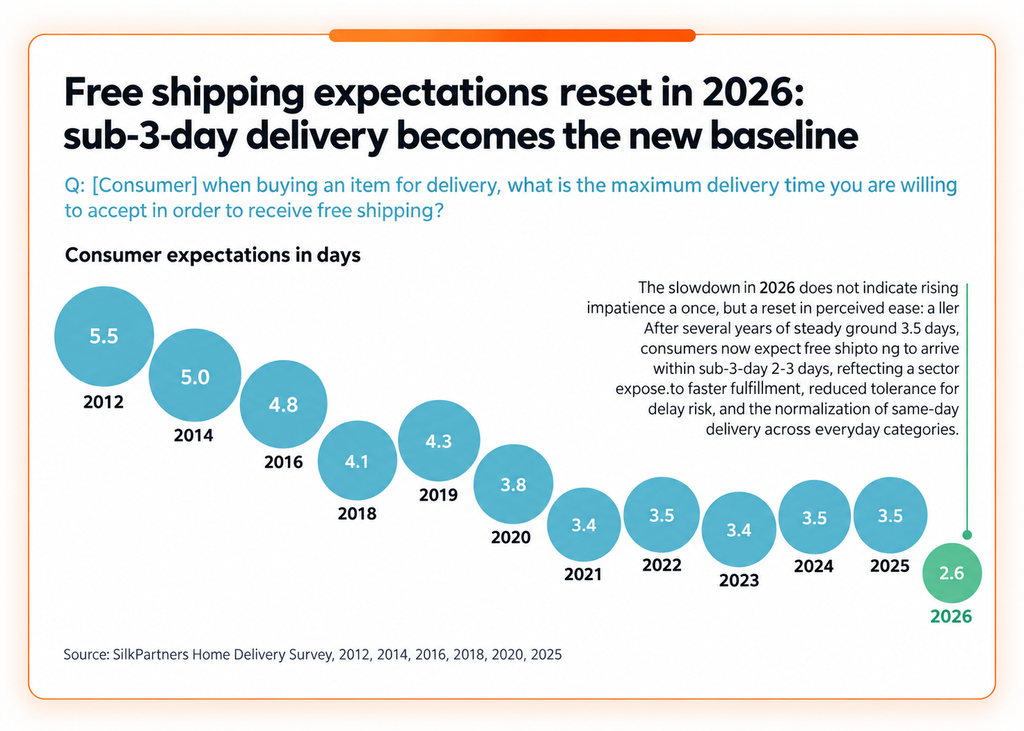
In fact, 21% of US online shoppers have abandoned a purchase because delivery was too slow (Stripe, 2026). Shoppers are not ready to wait. Expectations have also changed significantly over time: while shoppers were willing to wait around 5.5 days for free delivery in 2012, that window has fallen to just 2.6 days in 2026 (AlixPartners, 2026). Especially for gifts or other time-sensitive purchases, shoppers become less patient.
For IMP Marketing, we must make the website clearly reflect the brand’s business and fulfillment setup before checkout.
The Solution: How Did We Make eCommerce Trust Signals Clearer?
Based on what we found during the audit, we focused on two areas: making the business easier to verify and giving shoppers clearer delivery information throughout the buying journey.
1. Adding Clear Business and Address Information
The first priority was fixing the business information required for Google Ads. IMP Marketing quickly added a clear business address and the company details Google needed to verify the site.
We also communicated these updates to customers by making the US warehouse fulfillment clearer on the website and adding the country of manufacture, giving shoppers more context about where products came from and how their orders were fulfilled.
After the update, the business information was easier for Google to verify, the account was no longer restricted for this issue, and customer questions about the warehouse also decreased to zero.
2. Giving Shoppers a Clearer Delivery Expectation
The second focus was reducing uncertainty around delivery. IMP Marketing made the delivery expectation clearer at different stages of the shopping journey.
On the product detail page, we placed the estimated delivery information close to the Add to Cart area so shoppers could see when the order was expected to arrive while they were still considering the product.
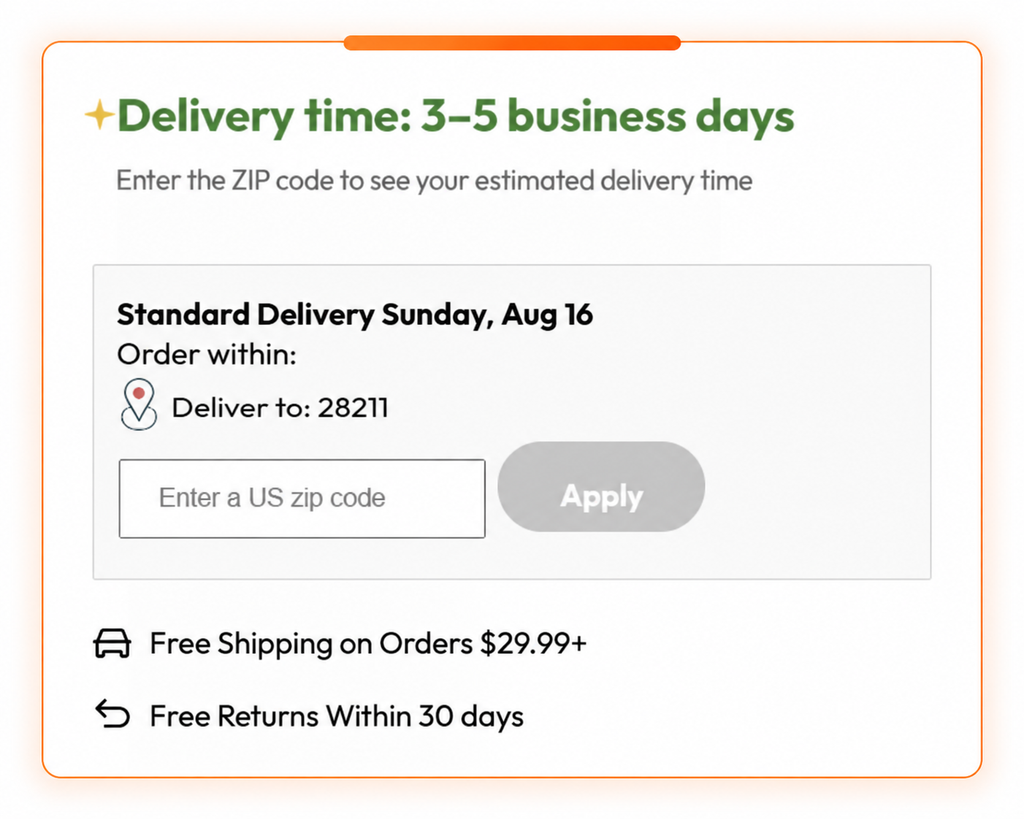
We also added a location-based delivery estimate, allowing shoppers to check the expected shipping time based on their area. This gave customers a more relevant estimate instead of relying on one general delivery timeframe for everyone.
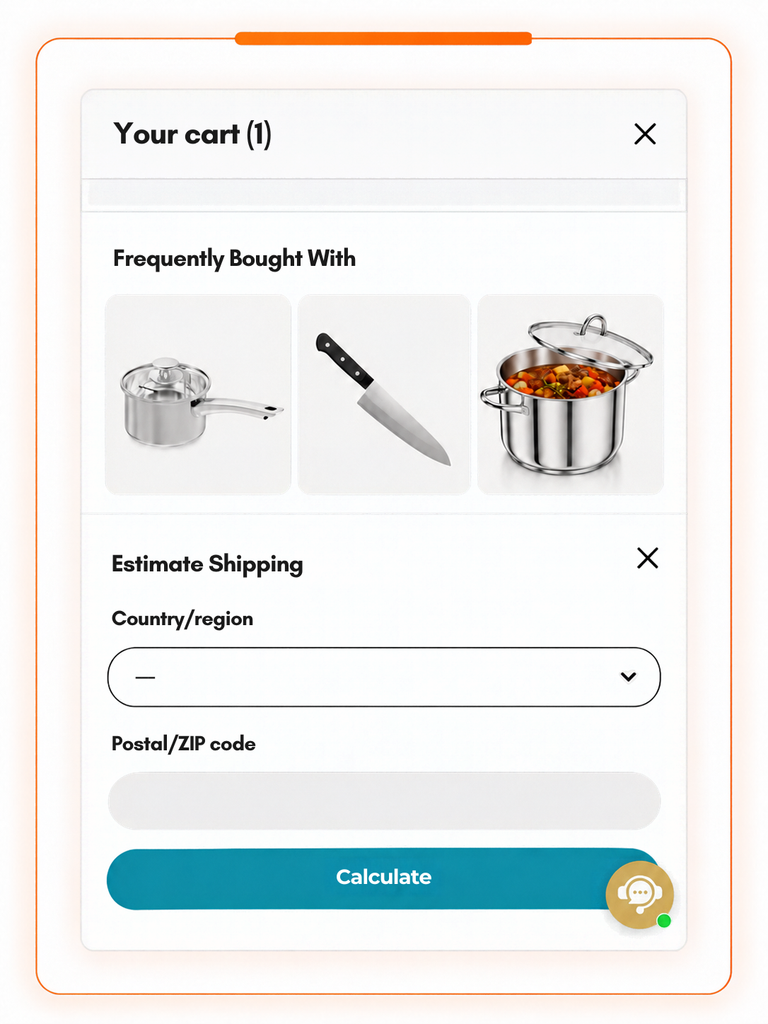
Finally, at checkout, customers could see the available shipping methods before placing their order. When the order was shipped, they also received a shipping confirmation email and tracking link, so they could continue following the delivery after purchase.
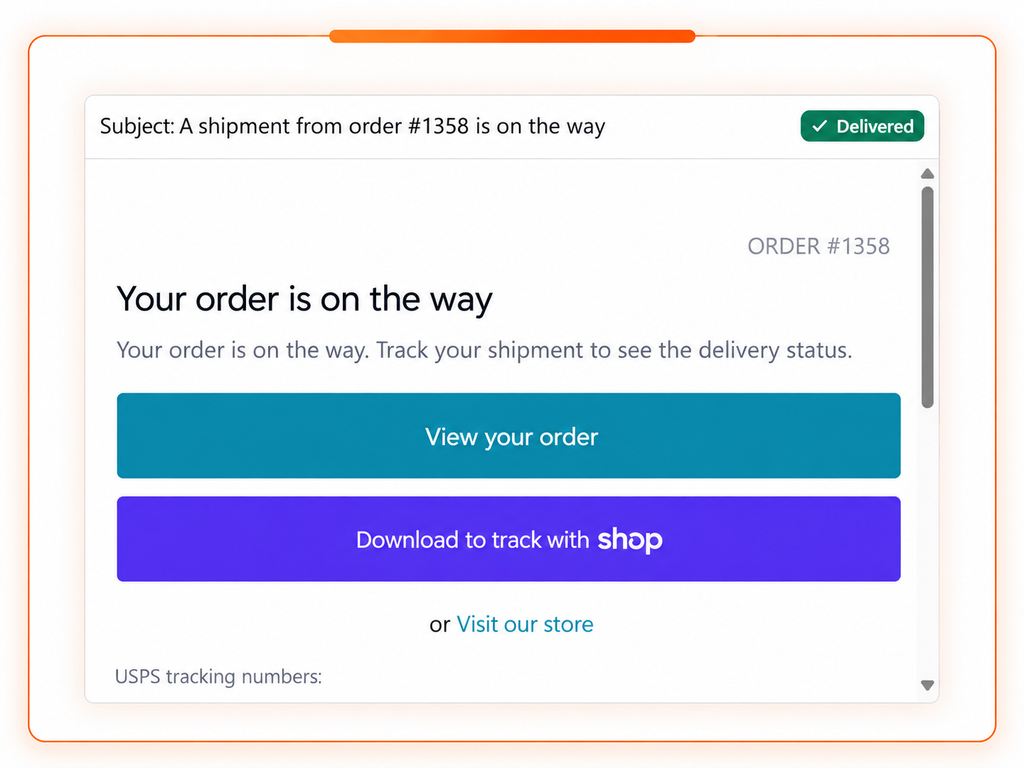
We made the process of the delivery experience clearer from product browsing to checkout and post-purchase. It helps that the shoppers don’t contact support whenever they need an update.
The Result: What Changed After We Improved the eCommerce Trust Signals?
After the updates, shipping-related questions in live chat dropped to zero. Customers could now check the US fulfillment and delivery information themselves instead of repeatedly contacting the brand.
At the same time, checkout abandonment fell from 35% to 28%, a 7-percentage-point decrease. The Checkout-to-Add-to-Cart rate also improved, growing from 46% to 67%, while the conversion rate increased by 1.5%.
The decrease in abandonment, together with shipping questions dropping to zero, reinforced what we had identified during the audit: shoppers had been concerned about the warehouse location and the estimated delivery date throughout the purchase journey.
The Lesson: What Did We Learn About eCommerce Trust Signals?
A business can already have strong operations behind the scenes while its website still fails to communicate them.
For this client, the US warehouse, fulfillment capability, and business presence already existed. The audit helped us identify where those advantages were not being translated into visible eCommerce trust signals for platforms and customers.
The lesson was not simply “add an address” or “show a delivery date.” It was to keep checking whether the website still reflects what the business can actually offer.
As operations evolve, the information customers see around business identity, fulfillment location, delivery expectations, and other trust signals should evolve with them.
Quick Case Study FAQ
1. How often should an eCommerce brand review its trust signals?
Trust signals should be reviewed whenever something meaningful changes in the business, not only when a website is first launched. A new warehouse, different fulfillment partner, updated shipping coverage, new business address, or changes in delivery speed can all make existing website information outdated.
It is also worth reviewing these details during broader website or advertising audits. In this case, the operational setup was already in place, but the website had not fully caught up with what the business could actually offer. Regular checks can help prevent that gap from growing over time.
2. What if an eCommerce brand ships from more than one warehouse?
When orders can come from different locations, the website should explain the fulfillment setup in a way that reflects what customers can realistically expect, especially if warehouse location affects delivery speed or availability. It is to give shoppers enough context to understand where their order may come from and provide a delivery estimate that remains accurate for their location.
3. Which eCommerce trust signals should brands prioritize first?
Start with the information shoppers need to decide whether they can confidently place an order. That usually means making the business identity clear, showing where or how orders are fulfilled, setting realistic delivery expectations, and explaining what happens after an order is placed.
Customer questions can also help identify what deserves priority. If support repeatedly receives the same question about shipping location, delivery timing, returns, or another part of the purchase process, that is a strong sign that the website may not be answering that question clearly enough on its own.