Revenue Share Models: Gross Revenue or Net Revenue, Which Is Fairer?

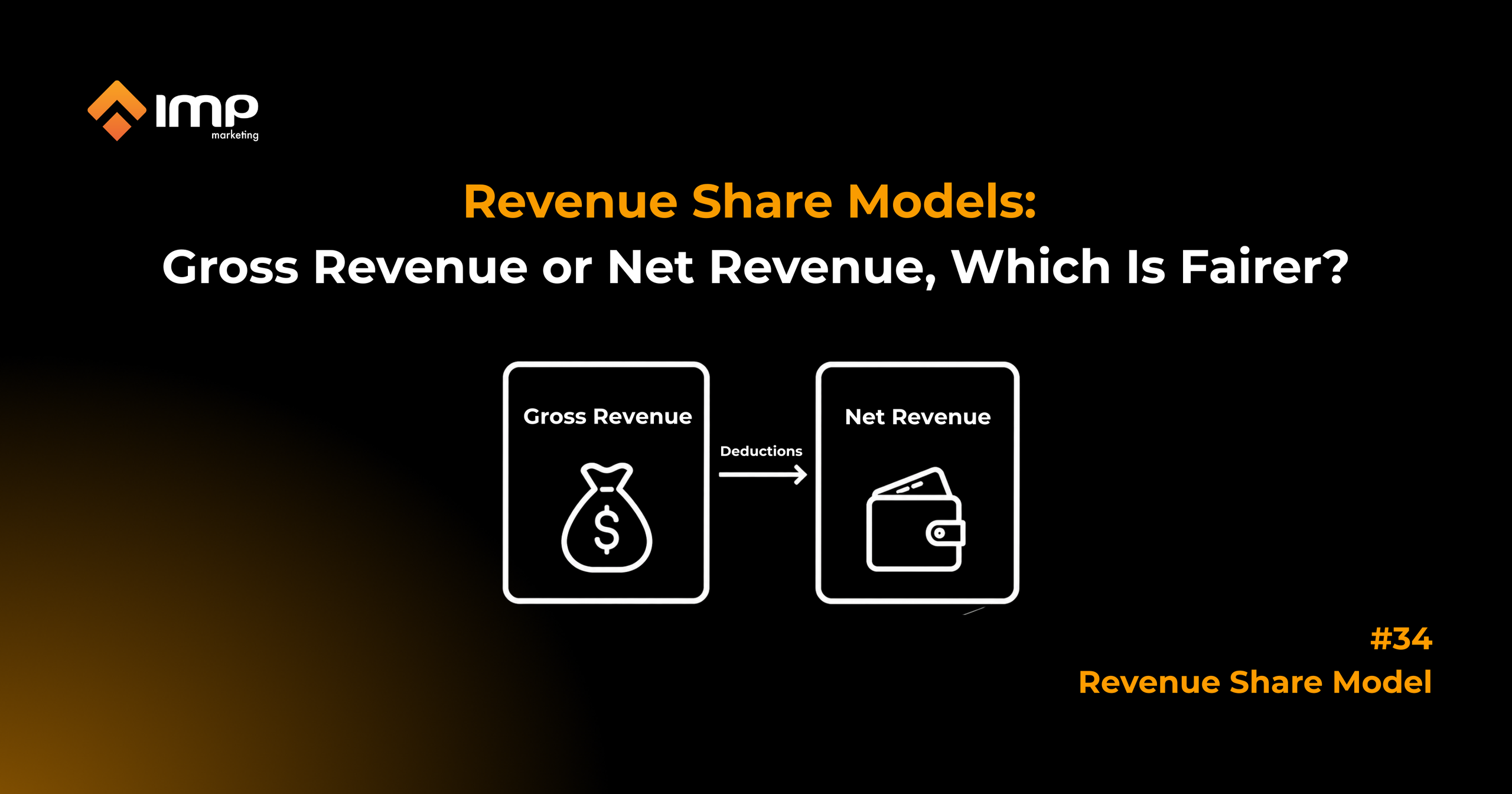
1. What Are Gross Revenue and Net Revenue?
Gross revenue, sometimes called total revenue, may include product sales, service fees, subscription income, licensing fees, or other revenue sources. It shows how much the business generates at the top line but does not show how much remains after refunds, discounts, or other reductions.
Net revenue, also called net sales, is calculated after deductions such as customer refunds, discounts, allowances, or other direct reductions. It gives a clearer view of how much revenue the business actually keeps.
← SWIPE HORIZONTALLY TO VIEW FULL TABLE
| Revenue Type | Gross Revenue | Net Revenue |
|---|---|---|
| What it shows | Gross revenue shows total sales activity | Net revenue shows how much revenue remains after |
| Example | If a business generates $100,000 in sales during one month, the gross revenue is $100,000. | If the business later issues $5,000 in refunds and offers $3,000 in discounts, the net revenue is $92,000. |
2. The Difference Between Gross and Net Revenue in a Revenue Share Partnership
In a revenue share partnership, the model is usually built around a base fee plus a percentage of incremental revenue. Whether the percentage is calculated from gross revenue or net revenue depends on what both sides agree to use.
2.1. How Does Revenue Share Based on Gross Revenue Work?
In a revenue share partnership, gross revenue is calculated as incremental revenue before any agreed deductions are removed.
From our experience, the biggest advantage is clarity. Revenue share marketing agencies and founders can usually track the same revenue number more easily and spend less time discussing how the calculation should work.
However, gross revenue can have problems when the revenue shown on the dashboard reflects sales before or after discounts, depending on how the platform reports the transaction. For that reason, many founders prefer to calculate revenue share from the actual sales amount the business receives after discounts are applied.
Founders and revenue share marketing agencies should therefore agree clearly on how revenue will be measured before the partnership begins.
2.2. How Does Revenue Share Based on Net Revenue Work?
Net revenue in a revenue share partnership is calculated after agreed-upon deductions are removed from total sales. Depending on the agreement, those deductions may include refunds.
Some founders prefer using net revenue because they want the agency to share the impact of discounts, shipping costs, and fees. However, this can make the calculation more complicated because each platform, such as Shopify and Amazon, records and calculates these adjustments differently.
Founders may also need to discuss major spending decisions with the agency before moving forward, as those figures directly affect the revenue share calculation. This level of reporting and approval can take significant time and become difficult to maintain consistently.
As a result, net revenue works best when both sides have reliable financial reporting.
Which Revenue Share Model Is Fairer?
Gross revenue can be fairer when revenue share marketing agencies and founders want a simple calculation that is easy to track through shared dashboards and does not require detailed expense reporting.
Net revenue may appear fairer because the calculation considers deductions, but the added reporting and verification can make the partnership harder to operate.
From our experience, a simple gross revenue structure with a reasonable percentage often creates better transparency, faster decision-making, and fewer disagreements over time.
The strongest revenue share partnerships are built around creating a structure that keeps both sides aligned, committed, and focused on growing the business together over the long term.
Conclusion
Gross revenue and net revenue can both work in a revenue share partnership, but the better choice depends on how much complexity both sides are willing to manage.
For many growing eCommerce brands, a simple gross revenue structure creates the strongest balance between fairness, transparency, and ease of operation. The most important part is agreeing on the calculation clearly before the partnership begins so both sides can stay focused on growth rather than debating the numbers.
Revenue Share Marketing Agency FAQs
1. What should be defined before calculating revenue share?
Before calculating revenue share, both sides should clearly define which revenue is included, which deductions are allowed, what reporting source will be used, and when the calculation is finalized. A clear revenue share agreement helps founders and revenue share marketing agencies avoid disputes later, especially when refunds, discounts, or adjustments affect the reported sales number.
2. Why does the reporting platform matter in a revenue share calculation?
The reporting platform matters because Shopify, Amazon, and other eCommerce platforms may record discounts, refunds, and other adjustments differently. If both sides use different numbers or definitions, the revenue share calculation can quickly become confusing. Agreeing on one reporting source or shared dashboard gives both sides a consistent number to work from throughout the partnership.
3. How can founders keep a revenue share calculation fair without making it too complicated?
Founders can keep a revenue share calculation fair by agreeing on a simple structure, clear revenue definitions, and a reasonable percentage before the partnership begins. Adding too many deductions or approval requirements can make reporting harder to maintain. The goal is to create a revenue share structure that both sides can understand, verify, and operate consistently over the long term.